Summary:
You bought a whole-house generator to protect your family during outages. But when the lights actually go out across Suffolk County, NY, that generator only works if you have enough propane to keep it running.
Run out of fuel three days into a week-long outage, and you’re back to dealing with spoiled food, a flooded basement, or worse. Hurricane Sandy left over 632,000 Long Island residents without power for two weeks. Your propane setup needs to handle that reality. The right tank size, reliable delivery, and proper preparation make the difference between weathering the storm and scrambling for solutions in the dark.
Why Propane Works Better Than Other Generator Fuels
Propane has become the standard fuel for standby generators in Suffolk County, NY for reasons that matter during actual emergencies. Unlike gasoline, which breaks down after a few months in storage, propane stays stable indefinitely. Fill your tank today and it’ll fire up your generator perfectly three years from now.
That stability is everything for emergency backup power. You’re not running this equipment daily—you’re counting on it for the handful of times each year when severe weather takes down the grid. Propane removes the variables.
It also burns cleaner than gasoline or diesel, creating less engine wear and fewer maintenance headaches. You’re not fighting carbon buildup or scheduling constant oil changes. The fuel itself does less damage to your equipment, extending your generator’s lifespan and keeping it dependable when an outage hits.

Propane Whole House Generator Fuel Consumption Rates
Most whole-house generators burn 2 to 3 gallons of propane per hour. That number shifts based on your generator’s size and electrical load, but it’s solid enough for planning your fuel supply.
A 20kW generator at half capacity uses around 1.2 gallons per hour. Push it to full load—running your entire home including AC, water heater, and every circuit—and you’re closer to 2.5 gallons per hour. That difference determines how long your propane tank lasts during extended outages.
Here’s what that means in practice. A 500-gallon propane tank gives you about 400 gallons of usable fuel (tanks fill to 80% for safety). At 2.5 gallons per hour, you get roughly 160 hours of runtime—about 6 to 7 days of continuous power. That covers most storm-related outages in Suffolk County, NY.
Need more buffer? A 1,000-gallon tank doubles your runtime to two weeks or more. The math is simple—bigger tank, longer runtime. The question is how much cushion you want between your family and the next multi-day blackout.
Your actual consumption depends on load management too. Running everything at full blast 24/7 burns fuel fast. But if you’re strategic—shutting off non-essential circuits, managing your thermostat, avoiding simultaneous high-draw appliances—you stretch that supply significantly. Small adjustments matter when propane deliveries might be delayed by storm conditions.
Standby Generator Fuel Tank Sizing for Suffolk County Homes
Tank sizing depends on your generator’s capacity, desired runtime, and whether you use propane for other applications beyond emergency backup power.
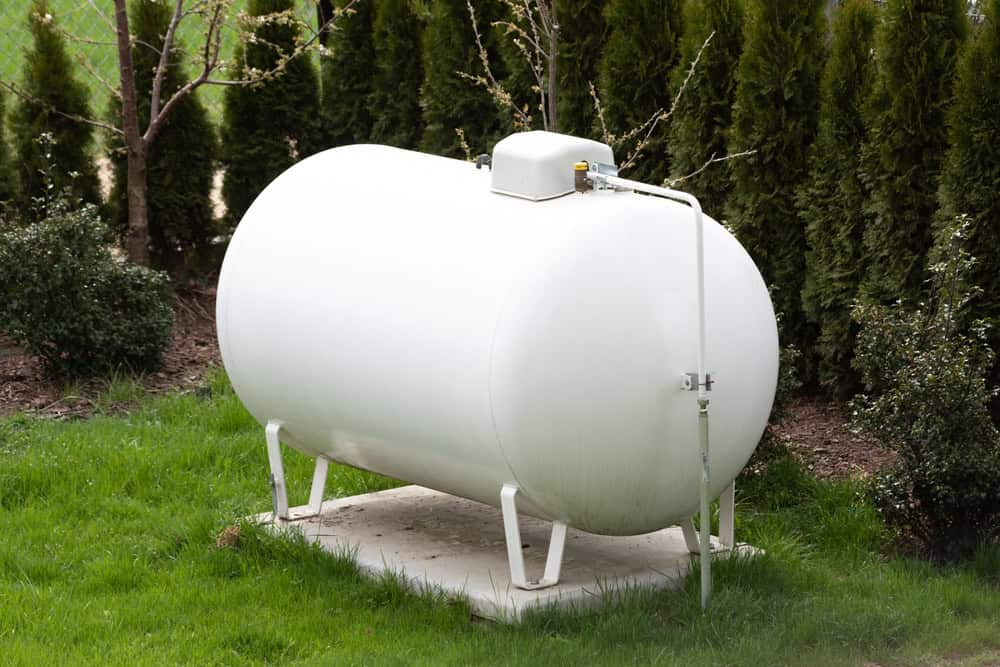
For most Suffolk County, NY homes with 16-22kW generators, a 500-gallon tank hits the right balance. You get a solid week of runtime without excessive yard space or massive upfront costs. This size works when your generator is your main propane use and you expect power restoration within a reasonable window.
A 1,000-gallon tank makes sense if you have a larger generator (24kW or up), live where outages run longer, or use propane for multiple purposes. Some homeowners fuel pool heaters, outdoor kitchens, or backup heating with the same supply. If that’s your setup, the larger tank works because you’re drawing from it year-round, not just during emergencies.
You’ll also choose between above-ground and underground installation. Above-ground tanks cost less to install and simplify inspection and maintenance. You see your fuel level instantly, and technicians access everything quickly for service. The downside—they’re visible in your yard.
Underground tanks disappear from view, preserving your landscaping and eliminating the aesthetic issue. They’re also protected from Long Island’s coastal salt air, which corrodes above-ground equipment faster. The tradeoff is higher installation costs from excavation and specialized anti-corrosion coatings.
We can guide these decisions based on your property, local codes, and budget. Suffolk County, NY has specific setback requirements—minimum distances between tanks and your house, property lines, and other structures. Professional installation keeps you compliant while maximizing convenience and safety.
Emergency Backup Power and Propane Delivery Timing
Your generator stops when your tank runs dry, which makes propane delivery timing critical for emergency backup power. Most providers offer automatic delivery based on usage monitoring, but when you’re depending on fuel for storm preparation, you need scheduling that accounts for severe weather and supply disruptions.
The smart play is proactive. Don’t wait until your tank hits 20% to think about refilling. During hurricane season or when nor’easters are forecast, top off your tank even at 50%. Delivery trucks can’t always get through during active storms, and you don’t want to ration power because you’re running low on fuel.
We offer smart tank monitoring that tracks fuel levels remotely and schedules deliveries automatically. That removes guesswork, but manually checking your gauge before severe weather provides confirmation. Technology helps until it doesn’t, and a quick visual check gives you certainty when forecasts turn threatening.

Power Outage Preparation for Your Propane System
Preparation starts weeks before hurricane warnings, not hours before landfall. Your propane system deserves the same attention you give to boarding windows or stocking emergency supplies.
Start with a full tank. Heading into peak storm season—June through November in Suffolk County, NY—schedule delivery to bring your tank to 80% capacity. That’s your baseline. You want maximum fuel available because you don’t know when the next delivery becomes possible once storms hit.
Inspect your tank and connections next. Check for rust, damage, or wear on above-ground tanks. Verify your regulator functions properly and connections between your tank and generator are secure. Spot anything questionable? Call us for professional inspection. A small leak or faulty connection becomes a crisis when you’re running your generator through multi-day outages.
Test your generator under load before you need it. Run it 30 minutes to an hour with household systems active. Confirm it pulls fuel properly, produces no unusual sounds or performance issues, and your automatic transfer switch works as designed. Don’t discover generator problems during an outage—fix them now while technicians are available and parts are in stock.
Clear the area around your propane tank and generator. Trim vegetation that could block access or ventilation. Ensure clear paths for delivery trucks and service vehicles. During storm recovery in Long Island, NY, crews deal with downed trees and debris everywhere. Making equipment access easy gets you faster service when you need it.
Document our emergency contact information somewhere accessible—not just in your phone, which might die after days without power. Write it down, laminate it, stick it on your fridge or in your emergency kit. You want to reach us quickly for emergency delivery or service calls.
Generator Maintenance Services and Fuel Management During Outages
Once major storms hit and power goes out across Suffolk County, NY, propane delivery gets complicated. Roads are blocked by downed trees and power lines. Delivery trucks prioritize emergency services and critical facilities. Your residential delivery might delay hours or days depending on conditions and location.
Pre-storm preparation buys you time. Starting with a full tank means a 500-gallon supply running a typical whole-house generator gives you nearly a week before worrying about refueling. That usually covers the immediate crisis and gets you into recovery when delivery services catch up.
If you’re running low during extended outages, contact us immediately. Don’t wait until 10% and face imminent shutdown. We triage emergency deliveries by need and safety—medical equipment, critical facilities, and customers risking empty tanks get priority. Earlier calls improve your chances of scheduling before your tank runs dry.
We offer emergency delivery with premium pricing during active storms. It’s expensive but it’s a lifeline facing generator shutdown with no alternatives. Know what we offer before needing it, and factor that into emergency planning and budgets.
Your backup plan should include fuel conservation strategies. If delivery delays and your gauge drops, prioritize electrical load. Turn off non-essential circuits. Run AC or heating at minimum comfort instead of usual settings. Avoid simultaneous high-draw appliances like electric dryers or multiple kitchen devices. Every saved gallon extends runtime and buys time for delivery.
In worst cases where delivery isn’t possible and you’re truly running out, you may need to shut down your generator partially to preserve fuel for critical needs—refrigerator, medical equipment, or sump pumps during heavy rain. Not ideal, but better than complete shutdown. Having a relationship with reliable local propane services makes all the difference. We know the area, understand Suffolk County, NY storm response challenges, and work to get fuel to our customers as quickly and safely as possible.
Reliable Propane Services for Suffolk County Generator Owners
Your whole-house generator works only as well as the propane services supporting it. The right tank size, a href=”https://libertygasservice.com/propane-delivery/”>proactive delivery scheduling, and proper generator maintenance services create a system that functions when severe weather knocks out power across Suffolk County, NY.
Start with properly sized propane tanks—500 gallons for most homes, 1,000 gallons for extended runtime or multiple propane applications. Keep tanks full heading into storm season and work with propane providers who understand emergency fuel delivery urgency during outages.
Test your system before needing it, maintain clear equipment access, and plan for fuel conservation if delivery gets delayed. These steps separate riding out multi-day outages comfortably from scrambling in darkness when generators shut down.
We provide professional propane tank installation, timely delivery, and local Suffolk County, NY expertise to keep your emergency backup power system ready for whatever weather arrives.