Summary:
You’re looking at your yard and trying to picture where a propane tank would go without ruining the view. Or maybe you’re tired of looking at the one you already have. Underground propane tanks solve that problem, but the benefits go deeper than just hiding equipment.
Suffolk County properties—especially in areas like the Hamptons and North Fork—put a premium on curb appeal. But underground tanks aren’t just about looks. They handle our coastal weather better, last longer, and can actually make more sense financially over time. Here’s what you need to know about underground propane tanks and whether burying one makes sense for your property.
Why Underground Propane Tanks Work Better for Suffolk County Properties
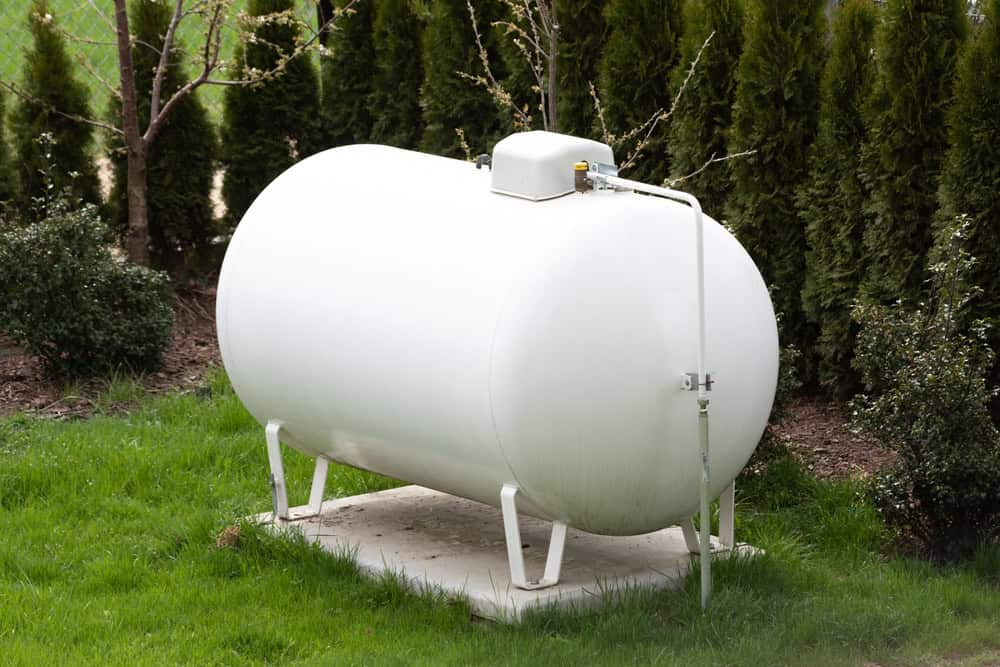
Underground propane tanks keep your yard looking the way you want it. All you see is a small dome at ground level—easy to hide with landscaping or lawn features. For properties in Westhampton Beach, East Hampton, or anywhere along the North Fork, that matters.
But the real advantage shows up in how these tanks perform. Buried below the frost line, your propane stays at a more consistent temperature year-round. That means better pressure, more reliable performance, and less stress on your system during Suffolk County’s coldest months or hottest summer days.
The protection works both ways. Your tank isn’t exposed to coastal storms, heavy snow, or the salt air that accelerates corrosion on above-ground equipment. And if something ever does go wrong, a leak from an underground tank disperses into soil rather than pooling as vapor above ground—a genuine safety advantage.
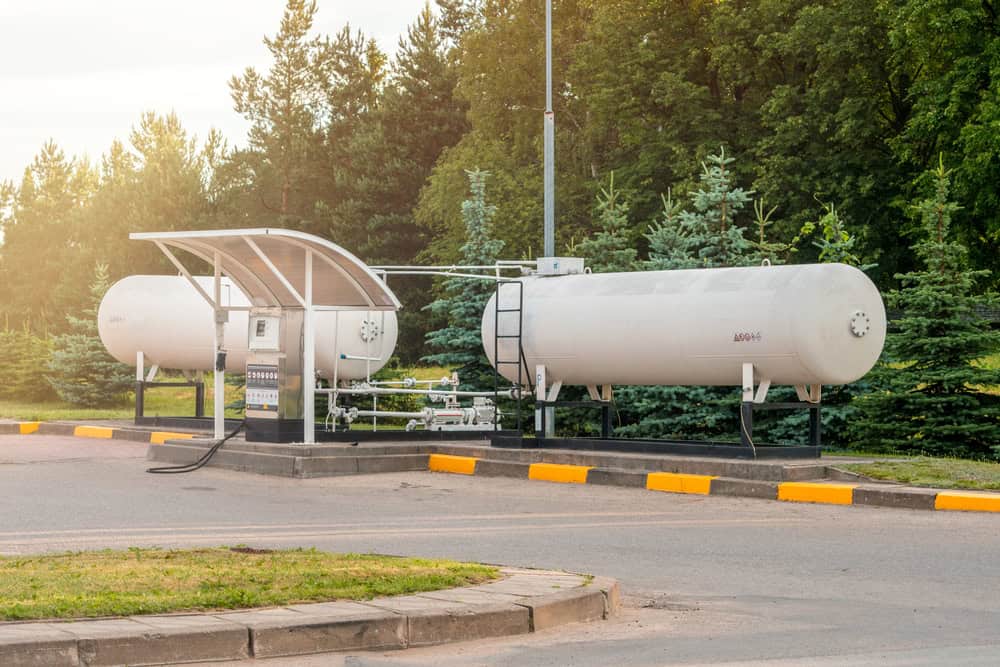
250 Gallon Propane Tank Underground: When Smaller Makes Sense
A 250 gallon underground propane tank works well for specific situations. If you’re running a few appliances—maybe a fireplace, water heater, and cooking range—but not heating your whole home with propane, this size covers your needs without overbuilding.
These tanks measure about 7 feet 8 inches long with a 30-inch diameter. When filled to the safe 80% capacity, you’re looking at 200 gallons of usable propane. That’s enough for moderate use without the footprint and cost of larger tanks.
Vacation homes see the biggest advantage here. If you’re only using your Suffolk County property on weekends and summers, your annual propane consumption drops dramatically compared to year-round residents. A property that would burn through 800 gallons living there full-time might only need 200-300 gallons with seasonal use. The 250 gallon tank matches that reality.
Installation costs less than larger tanks, both for the tank itself and the excavation work. You’re still looking at professional installation with proper permits and safety measures, but the scope of work is smaller. The hole doesn’t need to be as large, the equipment requirements are lighter, and the whole process typically wraps up faster.
The tradeoff is delivery frequency. Smaller capacity means more frequent refills if your usage climbs. And if you ever convert to full-time residence or add more propane appliances, you might find yourself needing an upgrade. But for the right situation—limited appliances, seasonal use, or as a backup system—the 250 gallon underground tank delivers without excess.
500 Gallon Underground Propane Tank Cost and Capacity
The 500 gallon underground propane tank is the workhorse size for most Suffolk County homes. It’s what you need when propane handles your heating, hot water, cooking, and maybe a generator or pool heater. At 80% fill capacity, you’re working with 400 usable gallons—enough to get through a heating season without constant refills.
These tanks measure roughly 10 feet long by 37 inches in diameter. That’s a significant piece of equipment, which is exactly why burying it makes sense. Above ground, it dominates your yard. Underground, it disappears except for a small access dome.
Cost breaks down into two main pieces: the tank and the installation. The tank itself typically runs $1,200 to $1,800. Installation adds another $1,100 to $4,700 depending on your site conditions, excavation complexity, and any special requirements like concrete slabs in flood-prone areas or extra anchoring near the water.
Suffolk County requires permits for propane tank installations, usually $25 to $50. We handle that paperwork—it’s part of being the qualified installer that regulations require. You’ll also need proper setbacks: at least 10 feet from your home and 10 feet from property lines.
The excavation process takes about a day under normal conditions. Contractors dig a hole large enough to accommodate the tank plus room for proper backfill. They install sacrificial anode bags to prevent electrolysis—underground electrical currents that would otherwise corrode the steel over time. The tank goes in, gets connected to your gas lines, receives a pressure test, and then gets buried under at least a foot of rock-free dirt.
That upfront cost is higher than above-ground tanks, no question. But you’re buying 30 to 40 years of service life, protection from our coastal weather, and a solution that doesn’t compromise your property’s appearance. For homes between 2,500 and 4,500 square feet using propane as a primary energy source, the 500 gallon size hits the sweet spot between adequate capacity and manageable cost.
What It Actually Costs to Bury a Propane Tank in Suffolk County
Let’s talk real numbers. Underground propane tank installation in Suffolk County isn’t cheap, but understanding where the money goes helps you budget accurately and avoid surprises.
The tank purchase is your first cost. Expect $1,200 to $1,800 for a 500 gallon tank, or $2,500 to $4,500 for 1,000 gallon capacity. Those are just the tanks—before anyone digs a hole or runs a gas line.
Excavation adds $100 to $300 per hour for equipment and operator. Most installations need 10 to 12 cubic yards of digging, which translates to $500 to $2,400 in excavation costs. Suffolk County’s soil conditions matter here. Sandy soil near the coast digs easier than areas with more clay or rock. If your property has challenging terrain, expect to land on the higher end.
Installation labor typically runs $1,000 to $1,500. This covers the actual tank placement, connection to gas lines, installation of protective anode bags, proper backfilling, and final testing. Licensed professionals handle this work because it has to meet NFPA 58 standards and local Suffolk County codes.
Add another $200 to $400 for site prep if you need concrete pads or special anchoring. Properties near water or in flood-prone areas often require tanks to be strapped to concrete slabs to prevent floating during heavy rain or flooding. It’s not optional—it’s safety.
Permits run $25 to $50 in most Suffolk County municipalities. Your propane company should handle the permit application since they’re the qualified installer. Factor in potential landscaping restoration after installation, which varies based on how much disruption occurs to your existing lawn or garden areas.
Total realistic range: $3,750 to $9,700 for a complete underground propane tank installation. That’s a significant investment compared to $1,500 to $2,500 for above-ground setups. But you’re not just buying a tank—you’re buying decades of reliable service, weather protection, and a solution that preserves your property’s aesthetics and value.
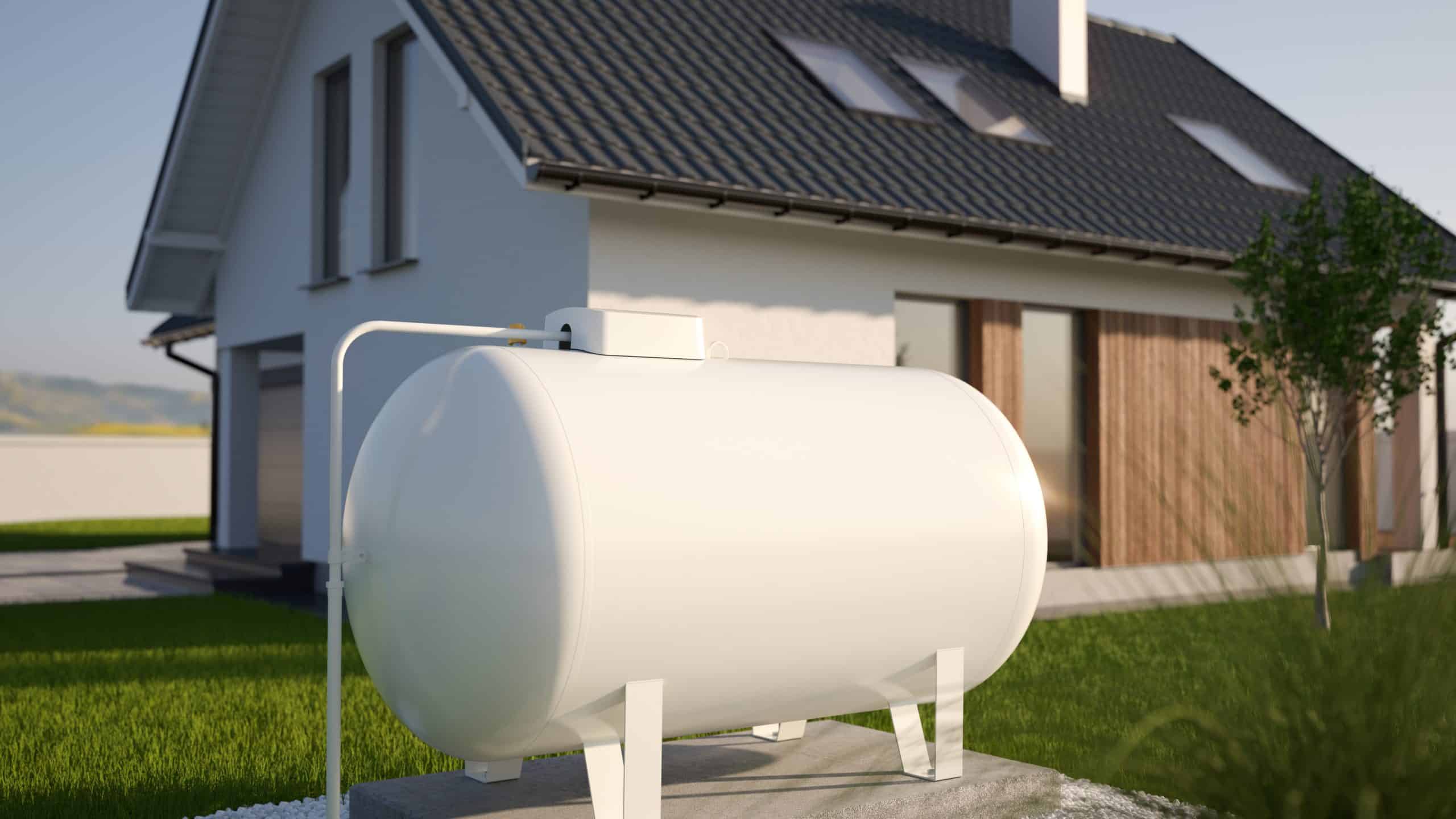
Direct Bury Propane Tank Installation Process
Direct bury propane tank installation follows a specific sequence. Understanding what happens helps you prepare your property and know what to expect on installation day.
Site selection comes first. We identify a location that meets setback requirements—minimum 10 feet from your home, 10 feet from property lines, away from septic systems, and clear of underground utilities. The spot needs to be accessible for delivery trucks but not in the path of vehicles that could damage the dome cover. Properties with extensive landscaping or tight spaces require more planning.
Excavation happens next. A backhoe or excavator digs a hole sized for your tank plus clearance for backfill material. For a 500 gallon tank, that’s roughly 12 feet long, 5 feet wide, and 6 feet deep. The hole needs to be deeper than the frost line—important in Suffolk County where winter temperatures can cause ground freezing.
Before the tank goes in, we attach sacrificial anode bags. These components protect your tank from electrolysis, the natural underground electrical current that causes steel corrosion. The anode bags divert that current away from the tank, acting as a protective decoy. Proper connection and activation with water is critical—skip this step and your tank’s lifespan drops significantly.
The tank gets lowered carefully into the hole, positioned level, and secured. Connection to your home’s gas lines happens next, with all joints tested for leaks. This requires access inside your home to check appliances and interior valves, so plan to be present during installation.
Backfilling uses clean, rock-free dirt. Natural rocks in the soil can puncture or damage the tank coating, so we screen the backfill material. The tank gets covered with at least 12 inches of soil—sometimes 18 inches if it’s under a parking area or driveway.
The dome cover goes on last. This protective cap sits at ground level and covers the tank’s valves, gauges, and fill connections. It’s typically green or another neutral color that blends with your lawn. You can landscape around it with flowers, shrubs, or decorative stones to make it even less noticeable.
Final inspection and testing ensure everything meets code. We perform a pressure test, check all connections, and verify the cathodic protection system reads correctly. Once signed off, your underground propane system is ready for use.
The whole process typically takes one day under normal conditions. Weather, soil complications, or difficult access can extend that timeline, but most residential installations from excavation to final hookup happen in a single visit.
Suffolk County Permit Requirements and Installation Regulations
Suffolk County administers its own petroleum bulk storage program, which means local requirements can be more stringent than state regulations. Understanding what’s required before installation prevents delays and ensures compliance.
Permits are mandatory for propane tank installations. The propane company—not you as the homeowner—must apply for the permit. National standards require installations to be done by qualified persons, and as the licensed professional, we handle the permit application to ensure all applicable laws are followed. Permit fees typically run $25 to $50.
Installation must meet NFPA 58 standards, which cover everything from setback distances to tank placement and connection requirements. Your underground propane tank must be at least 10 feet from buildings or lot lines of adjoining property that can be built upon. Specific measurements apply to pressure relief devices and filling connections, affecting exactly where the tank can go on your property.
Suffolk County municipalities may have additional local requirements. Towns like Smithtown, Brookhaven, and others within Suffolk County maintain their own fire prevention codes that layer on top of state and federal regulations. We know these local variations—it’s part of our expertise serving the area.
The tank itself must meet ASME standards (American Society of Mechanical Engineers, Section VIII, Division 1). Tanks are pressure-rated at 250 psig from -20°F to 125°F and must be registered with the National Board. Underground tanks require special coatings for corrosion resistance, typically a ready-to-bury coating specifically developed for underground propane tank durability.
Inspections happen at installation and periodically after. The initial inspection occurs before the tank gets covered—we must verify proper placement, anode bag installation, and connection integrity. All underground tanks and piping must remain uncovered until a Fire Marshal inspects and approves the installation.
Ongoing maintenance requirements include cathodic protection testing. This measures whether your anode bags are still protecting the tank from electrolysis. The system should read -0.85 volts DC or above. If the test fails, the tank isn’t protected and needs attention.
Any incident involving propane—leaks, fires, or accidental discharge—must be reported to local authorities within 24 hours. This applies to both installation mishaps and operational issues down the road.
Working with an experienced Suffolk County propane company like us means these regulatory requirements get handled correctly from the start. We know the local codes, maintain relationships with municipal inspectors, and ensure your installation passes all required inspections without complications.
Making the Right Choice for Your Suffolk County Property
Underground propane tanks cost more upfront, but they deliver advantages that matter for Suffolk County properties. Better weather protection, longer lifespan, improved aesthetics, and enhanced safety add up to value that extends well beyond the installation day.
The 250 gallon size works for limited applications and seasonal homes. The 500 gallon tank serves most year-round residences using propane for heating and multiple appliances. Both options require professional installation, proper permits, and compliance with local Suffolk County regulations.
If you’re ready to explore underground propane for your property, we’ve been handling installations throughout Suffolk County since 2010. We know the local requirements, understand coastal property challenges, and provide the expertise needed for installations that meet code and perform reliably for decades.