Summary:
You’ve decided on propane for your Suffolk County home. Now comes the part that actually matters—getting a tank installed correctly without overpaying, violating local codes, or tearing up your property more than necessary.
A 500-gallon underground system works for most homes between 2,500 and 4,500 square feet running propane heat, hot water, cooking, and maybe a generator or pool heater. Going underground keeps your yard looking clean and protects the tank from Suffolk County’s coastal weather. But underground installation isn’t as simple as digging a hole.
You’re dealing with excavation costs that vary by soil type, Suffolk County regulations that go beyond state requirements, NFPA compliance standards, and installation techniques that prevent your tank from floating during heavy rain. Here’s what you actually need to know about installing a 500 gallon underground propane tank on Long Island.
Why a 500 Gallon Underground Propane Tank Works for Most Suffolk County Properties
The 500-gallon size hits the sweet spot for most Suffolk County residential properties. You’re looking at a tank that holds 400 usable gallons when filled to the required 80% capacity, which leaves room for propane expansion as temperatures change.
This capacity handles a full-time 2,500 square foot home running propane heat, hot water, cooking appliances, and a backup generator for roughly 6-12 months between fills, depending on your usage patterns and how brutal the winter gets. If you’re heating a Hamptons vacation property used only seasonally, that same 500 gallons can last multiple years.
The underground option makes sense in Suffolk County for reasons beyond just aesthetics. Coastal properties deal with salt air that accelerates corrosion on exposed metal. Burying your tank protects it from direct weather exposure while keeping your property lines clean—something that matters in upscale communities where visible propane tanks affect curb appeal and potentially property values.
Underground Propane Tank Installation Cost: What Suffolk County Homeowners Actually Pay
The total cost to install a 500 gallon underground propane tank in Suffolk County typically runs between $2,300 and $3,500, though your specific number depends on site conditions and how much prep work your property needs.
Breaking down the costs: the tank itself runs $1,200 to $1,800. Underground installation adds another $1,100 to $4,700 on top of that tank cost, covering excavation, protective materials, and specialized installation work that above-ground setups don’t require. Suffolk County permits typically cost $25 to $50, which your installer should handle as part of the process.
Excavation represents the biggest variable in your final bill. If your property has rocky terrain—common in parts of Suffolk County—expect to add $200 to $300 for the extra equipment time and labor needed to dig through harder soil. Sandy soil digs easier but may require additional measures to prevent the tank from shifting or floating if your water table runs high.
The hole itself needs to be roughly 12 to 14 feet long, 5 feet wide, and 4.5 to 6 feet deep to accommodate a 500-gallon tank with proper clearances for backfill material. Contractors use pea gravel or sand for backfill rather than dirt—direct soil contact with the tank shell accelerates corrosion even with protective coatings.
Gas line installation from your tank location to your home adds $15 to $25 per linear foot depending on distance and terrain. If you’re placing your tank at the back of your property to keep it out of sight, that longer run increases costs. Most Suffolk County installations also include a concrete pad in areas with high water tables to anchor the tank and prevent floating during heavy rain or flooding.
Professional installers factor in all these elements during the site assessment. The cheapest quote isn’t always the best value if it skips protective measures that Suffolk County’s coastal environment demands or cuts corners on regulatory compliance that’ll cause headaches during inspection.
How to Bury a Propane Tank: Step-by-Step Installation Process
Burying a propane tank correctly requires following a specific sequence that protects both the tank and your property while meeting Suffolk County regulations. The process typically takes 1 to 3 days depending on weather conditions and site complexity.
Site assessment comes first. Your installer walks your property identifying the optimal burial location that meets setback requirements—underground tanks must be at least 10 feet from buildings, property lines that could be built upon, wells, septic systems, and ignition sources like AC compressors or electrical panels. The location also needs to avoid underground utilities, provide access for delivery trucks, and work within your property’s layout without interfering with future landscaping plans.
Excavation follows once permits clear. Contractors dig an oversized hole to accommodate the tank plus protective materials and proper drainage. For a 500-gallon tank, you’re looking at a hole approximately 12 to 14 feet long, 5 feet wide, and deep enough to bury the tank at least 6 inches below grade—or 18 inches below grade if any vehicle traffic might pass over the area.
The bottom of the excavation gets leveled and bedded with pea gravel or sand to create a stable, even surface. This bedding layer prevents damage to the tank’s protective coating during placement and provides drainage that keeps water from pooling around the tank.
Tank placement requires careful positioning. The tank gets lowered into the hole using excavation equipment, with installers ensuring the dome and access fittings align properly for future fills and maintenance. All fittings, valves, and connections on an underground tank are centrally positioned within the protective dome—different from above-ground tanks where components spread across the tank surface.
Cathodic protection installation happens before backfilling. Underground propane tanks need protection from electrolysis—natural electrical currents in soil and water that corrode buried metal over time. Installers attach sacrificial anode bags to the tank via copper wire, then position these anodes in the hole around the tank. These anodes absorb the damaging electrical currents that would otherwise eat through the tank shell. The anode bag gets activated with water and must be tested annually to verify it’s still providing protection.
Backfilling proceeds in stages. Installers use pea gravel or sand—never dirt in direct contact with the tank—filling around and over the tank until there’s at least 6 inches of protective material covering the top. Only after this protective layer is complete do they add topsoil for final grading. Warning tape often gets placed above the tank to alert future excavation work.
Gas line connection and testing complete the installation. Licensed technicians run the gas line from your tank to your home’s propane system, pressure test all connections for leaks, and verify proper flow rates. The tank must be filled promptly after installation—at least to 40% capacity—because an empty or nearly empty tank can float if excessive rain saturates the ground before you’ve added sufficient propane weight.
Final inspection by the local fire marshal confirms everything meets code before you can begin regular use. Suffolk County administers its own petroleum bulk storage programs with potentially more stringent requirements than New York State baseline regulations, so professional installers familiar with local codes prevent delays or failed inspections that force rework.
Suffolk County Propane Tank Regulations You Need to Know
Suffolk County operates under delegated authority from the New York State DEC for petroleum bulk storage, which means local requirements can exceed state minimums. Understanding these regulations prevents compliance issues that delay your installation or create liability concerns.
NFPA 58—the Liquefied Petroleum Gas Code—sets the baseline safety standards for propane tank installation, storage, and use nationwide. NFPA 54 covers gas piping and connections. Professional installations in Suffolk County must comply with both codes to pass inspection and operate legally.
The most critical NFPA requirement affects tank placement. Underground LP-gas containers must maintain at least 10 feet of clearance from buildings, lot lines of adjoining property that can be built upon, wells, septic systems, and important structures. This distance applies to all parts of the tank, not just the visible dome. Pressure relief devices and filling connections have specific measurement requirements that affect where you can position tanks on smaller Suffolk County properties.
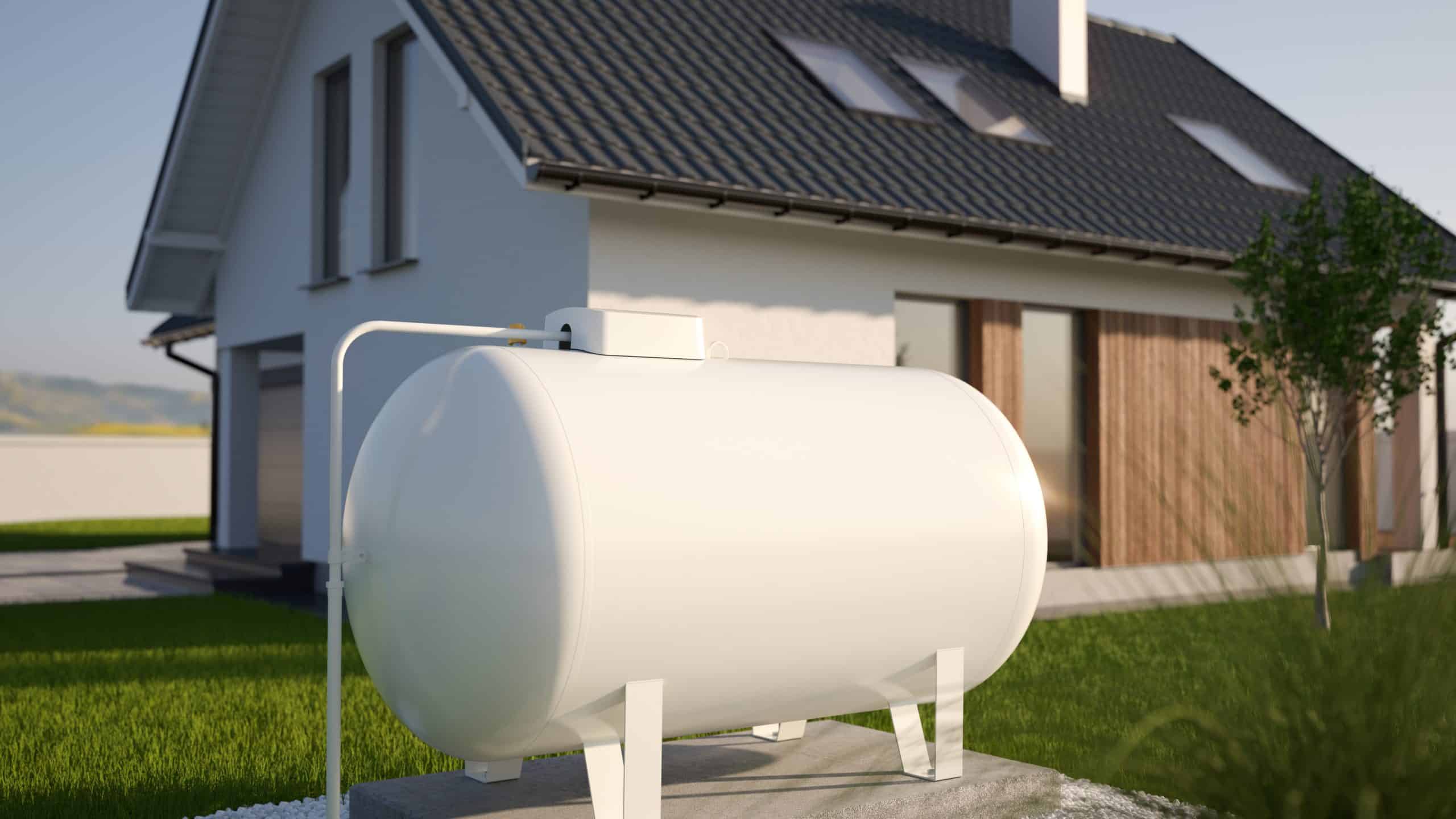
In Ground Propane Tank Safety and Long-Term Maintenance
Underground propane tanks require different safety considerations than above-ground installations, particularly in Suffolk County’s coastal environment where salt air and moisture accelerate corrosion.
The protective coating on your underground tank serves as the first defense against the elements. Tanks designed for burial come treated with corrosion-resistant coatings, but Suffolk County’s coastal conditions put extra stress on these protective layers. Salt air doesn’t stop at ground level—it permeates soil and groundwater, creating a more aggressive corrosive environment than inland locations face.
Cathodic protection provides the second layer of defense. The sacrificial anode bags installed during burial aren’t optional extras—they’re essential components that absorb electrical currents in the soil that would otherwise corrode your tank shell. These anodes require annual testing with a potential meter to verify they’re maintaining at least -.85 volts DC. If testing shows the protection has failed, you need to add additional anodes or replace depleted ones before corrosion damage occurs.
Proper burial depth matters for both safety and longevity. Tanks must be buried at least 6 inches below finished grade in areas without vehicle traffic. If any portion of your property where the tank sits could see vehicles—even occasionally—burial depth increases to 18 inches minimum. Bollards around the valve cover provide additional protection if the tank sits within 10 feet of roadways or driveways.
Water table considerations affect installation planning in coastal Suffolk County. If your property has a high water table or sits in an area prone to flooding, your tank needs anchoring to prevent floating. This typically involves pouring a concrete pad at least 10 inches thick extending 3 feet wider and longer than the tank dimensions, with rebar reinforcement. The tank gets strapped to this pad with cables and eye bolts before backfilling.
The floating risk is real—if water in the excavation hole rises above the liquid propane level inside your tank, an improperly secured tank will float up out of the ground, potentially damaging gas lines and creating safety hazards. This is why tanks must be filled promptly after installation, maintaining at least 40% capacity to provide sufficient weight.
Regular inspections catch problems before they become emergencies. Suffolk County’s coastal climate means you should schedule professional inspections every 3 to 5 years minimum, with annual checks recommended for tanks over 10 years old. Inspectors verify cathodic protection functionality, check for signs of corrosion or coating damage, test pressure relief valves, and confirm all connections remain leak-free.
Landscaping around your underground tank requires thought. While you can plant grass and sod over the burial area once installation completes, you cannot place permanent structures, patios, or heavy items over the tank. Code requirements prohibit anything that would prevent access to the dome for fills, inspections, and emergency service. Keep plantings a few feet away from the dome to maintain clear access and prevent root systems from interfering with tank components.
1000 Gallon Underground Propane Tank vs 500 Gallon: Sizing for Your Actual Usage
The jump from a 500-gallon to a 1000-gallon underground propane tank makes sense for specific situations, but most Suffolk County residential properties don’t need the larger capacity—and the cost difference is substantial.
A 1000-gallon tank holds approximately 800 usable gallons when filled to the required 80% capacity, doubling your storage compared to a 500-gallon system. This larger capacity suits homes over 4,500 square feet with high propane demand or properties running multiple high-consumption appliances simultaneously—whole-home heating, hot water, cooking, pool heating, and backup generators all pulling from the same supply.
The key question is whether you’ll actually use that extra capacity. A full-time 3,000 square foot Sagaponack home running propane for heat, hot water, cooking, pool heating, and a backup generator might consume 800 to 1,200 gallons annually. That usage pattern justifies a 1000-gallon tank, reducing refill frequency and ensuring you never run low during peak winter demand.
But if that same house only gets used three months per year, consumption drops to 200 to 400 gallons annually. A 500-gallon tank handles that usage easily, and you’re not paying for capacity you’ll never need.
Installation costs for 1000-gallon underground tanks run significantly higher. The tank itself costs $3,100 to $4,500—roughly double the 500-gallon price. Excavation costs increase proportionally because you’re digging a larger hole (approximately 18 to 20 feet long, 5.5 to 6 feet wide, and 5 to 6 feet deep). Total installed cost for a 1000-gallon underground setup typically exceeds $4,500 and can reach $7,000 or more depending on site conditions.
The larger excavation means more disruption to your property, longer installation time, and greater landscaping restoration work after the tank goes in. You’ll also have a larger area where you cannot place permanent structures or heavy landscaping features.
Delivery logistics favor smaller tanks in some Suffolk County locations. Propane delivery trucks need clear access to your tank’s fill connection. Properties with narrow driveways, tight turns, or limited space may have difficulty accommodating the larger delivery vehicles required for 1000-gallon fills, though this is rarely an issue for most residential sites.
For most Suffolk County homeowners, the 500-gallon size provides the right balance. It handles whole-home propane needs for typical residential properties, costs significantly less to install, requires less property disruption, and still provides months of capacity between fills. You’re not constantly calling for refills, but you’re also not paying thousands extra for storage capacity that sits empty most of the year.
The 1000-gallon option makes more sense for commercial applications, large estates with very high consumption, or properties where refill access is difficult and you want maximum time between service visits. For standard residential use, even in larger Suffolk County homes, 500 gallons typically proves sufficient.
Professional Underground Propane Tank Installation in Suffolk County
Installing a 500 gallon underground propane tank isn’t a project where you want to cut corners or trust inexperienced contractors. Suffolk County’s coastal environment, local regulations, and the permanent nature of underground installation all demand professional expertise that prevents costly mistakes.
The right installation protects your investment for decades. Proper excavation, cathodic protection, correct burial depth, appropriate backfill materials, and NFPA-compliant placement all contribute to a system that operates safely and efficiently through Suffolk County’s weather extremes and coastal conditions. Skip any of these elements, and you risk corrosion damage, failed inspections, floating tanks, or compliance issues that affect your property insurance and resale value.
Working with a local Suffolk County propane company familiar with area-specific challenges makes the difference between a smooth installation and one plagued by delays, rework, and unexpected costs. We’ve been serving this area since 2010 and understand the coastal corrosion factors, local permitting processes, fire marshal requirements, and site conditions that affect installation success.
We handle complete underground propane tank installations throughout Suffolk County, from East Setauket to the Hamptons and North Fork, with the local expertise that comes from 15+ years serving these communities. Free consultations help you determine the right tank size and placement for your specific property and usage patterns, with transparent pricing that covers all aspects of professional installation.