
Summary:
You’re standing in your driveway on a Tuesday morning, and the propane gauge is sitting lower than you’d like. Maybe you’re wondering if you should drive to an exchange location or schedule a refill. Or maybe you’re trying to figure out why your last bill had fees you didn’t expect.
Propane keeps Suffolk County homes heated, water hot, and grills firing all year. But the details around refills, deliveries, tank ownership, and pricing can get murky fast. This guide walks you through how propane tank refill services actually work—what your options are, what they cost, and how to avoid the headaches that come with choosing the wrong provider or misunderstanding your tank situation. By the end, you’ll know exactly what to ask for and what to expect.
Propane Refill vs Propane Exchange: What's the Real Difference?
When your propane runs low, you’ve got two main options: refill your existing tank or exchange it for a pre-filled one. They sound similar, but the difference affects what you pay and what you actually get.
Refilling means taking your tank to a filling station or having a propane delivery service fill it on-site. You keep your tank. You pay for the propane that goes in. Exchange means swapping your empty tank for a “new” full one at a retail location like a hardware store or gas station. You’re essentially renting a different tank each time.
Here’s where it gets important. Most propane exchange programs fill tanks to only 15 pounds, even though a standard 20-pound tank can hold the full 20. That’s 25% less propane. Propane refill services, on the other hand, top your tank to its actual capacity. You’re paying for a full tank and getting a full tank. The per-gallon cost of a propane fill is typically lower too—sometimes significantly.

Propane Tank Refill Cost: The Real Numbers Behind Refills vs Exchange
Cost is where the refill versus exchange decision really shows up. If you’re using propane regularly—not just for an occasional summer cookout—the savings add up fast.
Refilling can save you up to $1.75 per gallon compared to exchange services at retail locations. That’s not a small difference. Over the course of a year, especially if you’re heating your home or running multiple appliances on propane, you could be looking at hundreds of dollars in savings. The national average propane price sits around $2.78 per gallon as of April 2026, with the Northeast averaging closer to $3.14 per gallon. When you’re buying propane by the hundreds of gallons for home heating, every cent per gallon matters.
Why the gap between propane refill delivery and exchange? Exchange services build in the cost of tank maintenance, logistics, retail markup, and the convenience factor. You’re paying for the ability to grab a tank on your way home from the grocery store. A propane fill at a dedicated filling station or through home delivery cuts out those middlemen. You’re buying propane, not convenience.
There’s another angle that affects the cost of propane delivery. When you exchange a tank, any propane left inside is gone. You don’t get credit for it. You don’t get it back. If you swap a tank that still has a couple pounds in it, that’s money you’re leaving on the table. With a propane tank refill, you’re only paying for what you actually need to top off. You’re not losing unused fuel.
Propane delivery costs can also vary based on your provider’s fee structure. Some companies charge flat delivery fees. Others have minimum order requirements—often 100 gallons—which means you need to time your refill correctly to avoid paying for a trip that doesn’t fill your tank enough. Then there are the hidden fees: tank rental charges, off-route delivery surcharges, fuel surcharges, and reconnection fees. These can turn a seemingly cheap per-gallon rate into an expensive monthly bill.
For Suffolk County residents using propane for heating, water heating, or commercial purposes, propane refill services are almost always the smarter financial move. The exception might be if you’re in a bind and need propane immediately outside business hours for a propane fill up. But for planned use, refills win on cost every time. The propane delivery price per gallon is lower, you get more fuel, and you’re not paying for unnecessary convenience fees.
Understanding current propane prices and how they fluctuate seasonally also helps you save. Propane prices today might be lower in summer months when demand drops, while winter sees prices spike. If your provider offers price-lock programs, you can lock in a rate before peak season hits and avoid paying premium propane prices when everyone else is scrambling for emergency heating service.
Propane Gas Bottle Sizes and What They're Actually Used For
Not all propane tanks are created equal, and knowing which size you need matters more than you might think. The wrong size means more frequent refills, higher costs, or running out at the worst possible time. Understanding propane gas tank sizes helps you match your actual usage to the right equipment.
The most common portable size is the 20-pound cylinder. It’s what you see on backyard grills, patio heaters, and small generators. These hold about 4.7 gallons of propane when filled to capacity. They’re portable, easy to transport, and widely available for both propane refill and propane exchange delivery.
Then there are the 30-pound and 40-pound cylinders. These are popular for RVs, campers, and food trucks—anywhere you need more capacity but still need to move the tank around. A 40-pound tank holds roughly twice what a 20-pounder does, which means fewer trips to refill. Food trucks and mobile businesses often keep a spare cylinder on hand to avoid running out mid-service.
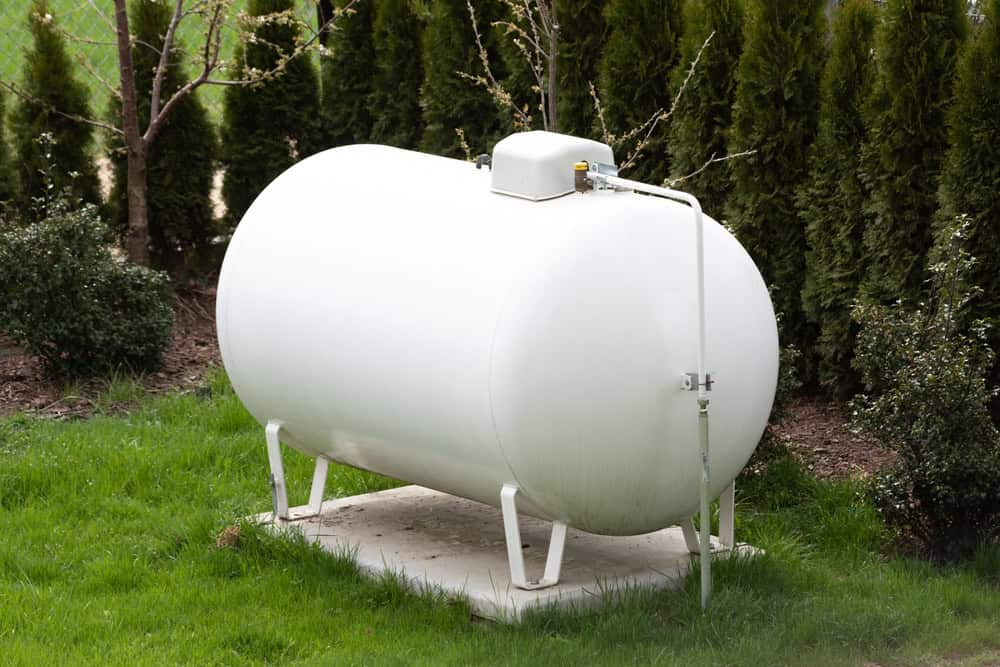
For residential use beyond grilling, you’re looking at stationary tanks. A 120-gallon tank (which actually holds about 96 gallons when properly filled to 80% capacity) can handle a fireplace, water heater, or a couple of appliances. It’s a good size for smaller homes or supplemental heating. Some homeowners use two 120-gallon tanks with an automatic changeover system, so when one empties, the system switches to the second tank automatically, giving you time to schedule a propane home delivery before you’re completely out of propane.
Step up to a 250-gallon or 500-gallon tank, and you’re covering whole-home heating, multiple appliances, and possibly a pool heater or backup generator. Most Suffolk County homes using propane as a primary heat source have a 500-gallon tank. It strikes the balance between storage capacity and refill frequency. You’re not calling for deliveries every few weeks, but you’re also not dedicating half your yard to a massive tank. A 500-gallon tank typically needs residential propane delivery two to four times per year, depending on usage and climate.
Commercial operations, farms, and larger properties often go with 1,000-gallon tanks or bigger. These are for high-volume users who need propane fuel delivery for heating large spaces, running heavy equipment, or powering commercial kitchens. The larger the tank, the less often you’re scheduling deliveries, which saves time and sometimes money if your provider offers volume discounts. A commercial propane supplier who understands high-volume needs can set up automatic monitoring and delivery schedules that keep your operation running without you having to think about it.
Tank size also affects where and how it can be installed. Smaller tanks can sit above ground with minimal clearance requirements. Larger tanks—especially 500 gallons and up—can be installed underground, which keeps them out of sight and can handle temperature extremes better. But underground installation costs more upfront and requires excavation. If you’re switching propane suppliers and you have an underground tank, the logistics get more complicated because removing and replacing underground tanks involves significant labor and cost.
Choosing the right propane gas tank size isn’t just about what fits in your yard. It’s about matching your actual usage to avoid running out or overpaying for capacity you’ll never use. If you’re heating a 2,500-square-foot home in Suffolk County through winter, a 500-gallon tank makes sense. If you’re just grilling on weekends, a 20-pound cylinder does the job. A local propane dealer who knows the area can help you calculate your needs based on square footage, number of appliances, and seasonal usage patterns.
Propane Tank Delivery Options: Scheduling, Timing, and What Actually Works
Getting propane delivered to your home or business should be straightforward, but it’s one of the areas where providers either shine or fall apart. Delivery scheduling, minimums, fees, and communication can make or break your experience.
Most propane companies offer two delivery methods: will-call and automatic. Will-call means you monitor your tank and call when you need a refill. Automatic means the company tracks your usage and schedules deliveries before you run low. Automatic is usually the better choice for residential heating because it removes the guesswork and the risk of running out during a cold snap. Will-call works fine if you’re only using propane for a grill or a single appliance, but for home heating, the stakes are too high to risk forgetting to check your gauge.
Delivery minimums matter. Many providers require a minimum order—often 100 gallons—to make the trip worth their time. If your tank is too full when you call, you might not meet the minimum and have to wait. If you wait too long and your tank is nearly empty, you could end up paying emergency delivery fees. The sweet spot is usually calling for a propane tank delivery when your gauge reads around 30%. That gives you enough lead time to schedule without paying for emergency service, and you’ll likely meet the delivery minimum.

Local Propane Delivery in Suffolk County: What to Expect from Start to Finish
Suffolk County has its own rhythm when it comes to propane delivery. The Hamptons, North Fork, and areas like East Setauket see seasonal demand spikes, which can affect delivery times if you’re not working with a local propane delivery provider who knows the area.
We’ve been serving Suffolk County since 2010, and we understand when demand hits. We know that January and February are peak heating months. We know that summer means pool heaters and grills. We plan our delivery schedules accordingly, which means you’re less likely to get stuck waiting days for a liquid propane delivery because we underestimated local demand. A propane company with local knowledge has the infrastructure and experience to handle seasonal swings without leaving customers in the cold.
Delivery logistics also vary by tank size and location. If you have a 500-gallon or 1,000-gallon tank, the delivery truck needs clear access to your property. That means your driveway should be wide enough, and the path to your tank should be clear of snow, debris, or landscaping that blocks the hose. Most delivery hoses reach about 100 feet, but if your tank is farther from the driveway, you’ll need to confirm your provider can accommodate that. Some propane service companies charge extra for difficult access or longer hose runs.
Timing is another factor. Some companies offer delivery windows; others give you a specific day but no time. If you’re home during the day, that’s usually fine. If you work and need to be present for delivery, you’ll want a provider who can narrow down the window or offer evening or weekend deliveries. Many residential propane delivery services don’t require you to be home—we can fill your tank while you’re at work—but you’ll want to confirm that ahead of time.
For commercial customers—restaurants, food trucks, construction sites—delivery speed matters even more. Running out of propane mid-service or mid-project isn’t just inconvenient; it costs money. Commercial propane services need to be responsive, with same-day or next-day delivery options when you’re in a bind. Not all providers prioritize commercial accounts, so it’s worth asking upfront about turnaround times for business deliveries. A commercial propane supplier who understands the stakes will have systems in place to handle urgent requests.
Suffolk County also has weather to contend with. Winter storms can delay deliveries, and summer traffic in the Hamptons can slow things down. We’ve been navigating these conditions for over a decade and know how to plan around them. We’re not scrambling to figure out routes or rescheduling because we didn’t account for seasonal traffic. We’ve seen every weather pattern and traffic jam Suffolk County can throw at us.
One more thing: some companies charge extra for off-route deliveries. If your property is outside their normal delivery area, they tack on a fee. If you’re in a more remote part of Suffolk County, confirm whether you’re in their standard service area or if you’ll be paying a surcharge every time. Gas propane delivery fees can add up quickly if you’re not paying attention to the fine print.
Emergency Propane and Emergency Heating Service: When You Need It and What It Costs
Running out of propane in the middle of winter is one of those situations you don’t forget. Your heat shuts off, your water goes cold, and suddenly you’re scrambling to get an emergency propane delivery that should have been planned weeks ago. When you’re out of propane, it’s not just uncomfortable—it’s a problem that needs solving immediately.
Emergency propane refill services exist for these moments, but they come at a cost. Most providers charge a premium—sometimes $50 to $150 on top of the regular delivery fee—for same-day or after-hours service. Some won’t offer it at all if you’re not an existing customer. If you’re calling around trying to find someone who’ll come out on a Sunday afternoon in February for an emergency propane fill, you’re going to pay for the urgency. Emergency heating service isn’t cheap because you’re asking a company to rearrange their schedule, pay overtime to drivers, and prioritize your delivery over planned routes.
The better approach is not needing emergency propane in the first place. That means monitoring your tank gauge regularly if you’re on will-call, or switching to automatic delivery so we handle it for you. Most tanks have a gauge that shows the percentage of propane remaining. When it hits 30%, it’s time to schedule a refill. Waiting until it’s at 10% or lower is when you start risking a runout.
Weather plays a role too. Suffolk County winters can be unpredictable. A sudden cold snap means everyone’s heating system is running harder, which drains tanks faster than expected. If you’re already cutting it close on propane, a week of below-freezing temps can push you into emergency territory. Providers who offer automatic delivery usually factor in weather patterns and adjust schedules accordingly, which is one more reason it’s worth considering. We watch current propane prices, weather forecasts, and your historical usage to make sure you don’t end up out of propane.
For commercial customers, running out isn’t just uncomfortable—it’s a business problem. A restaurant can’t serve food without working stoves. A construction site can’t heat a workspace without propane. Emergency propane delivery for commercial accounts is often faster because the stakes are higher, but it’s still more expensive and not guaranteed. Having a delivery plan that prevents runouts is part of running a tight operation. A reliable commercial propane supplier will work with you to set up monitoring systems or delivery schedules that keep your tanks full without you having to think about it.
If you do find yourself needing emergency propane, call your provider as early in the day as possible. The later you wait, the less likely they’ll be able to fit you in. And if you’re not an existing customer, be prepared for them to prioritize their regular accounts first. Some companies won’t take new customers for emergency service at all. That’s why establishing a relationship with a local propane dealer before you’re in crisis mode is smart.
The other option, if you’re truly in a bind and need a temporary solution, is to pick up a small cylinder from a local filling station or propane exchange location to tide you over until a full delivery can be scheduled. It’s not ideal for whole-home heating, but it can keep a space heater or generator running while you wait for your main tank to be filled. Think of it as a stopgap, not a solution.
Finding Reliable Propane Service Companies in Suffolk County
Propane service shouldn’t be complicated. You need fuel, you need it delivered on time, and you need to know what you’re paying for. But not every provider operates that way.
The difference between a good propane company and a frustrating one comes down to transparency, reliability, and local knowledge. You want a provider who fills your tank to capacity, not short-fills it. You want clear pricing without surprise fees for delivery, tank rental, or being slightly outside their usual route. You want someone who understands Suffolk County’s seasonal demands and plans accordingly. The best propane company for your needs is one that’s been serving the area long enough to know how to handle winter storms, summer traffic, and everything in between.
If you’ve been dealing with late deliveries, hidden charges, or poor communication, it’s worth knowing you have options. We’ve been serving Suffolk County since 2010, offering dependable propane delivery, expert tank installation, and straightforward pricing for both residential and commercial customers throughout the Hamptons, North Fork, and East Setauket areas.