Summary:
You’re researching propane tank costs because you need real numbers, not marketing fluff. Maybe you’re converting from oil, building new, or replacing an aging system. Either way, you’ve probably noticed that getting a straight answer about total costs feels harder than it should be.
Here’s what matters: the tank price is just the starting point. Installation labor, permits, gas line connections, and whether you buy or lease all affect what you’ll actually spend. In Suffolk County, most homeowners invest between $1,500 and $2,500 for a complete above-ground installation, but your final number depends on tank size, placement type, and whether you’re paying upfront or signing a lease agreement.
Let’s walk through what propane tank installation actually costs in 2026, what drives those numbers, and how to avoid the surprise fees that catch people off guard.
What Does Propane Tank Installation Cost in 2026
The average propane tank installation runs between $600 and $2,500, with most Suffolk County homeowners landing around $1,400 for a complete system. That range exists because your final cost depends on tank size, whether you’re going above-ground or underground, and what your property requires for compliance.
A basic 100-gallon above-ground tank starts around $600 installed. These work for single appliances like a water heater or stove, but they’re too small for whole-home heating. Most homes need a 500-gallon tank, which costs $1,200 to $1,800 for the tank itself, plus another $250 to $1,000 for installation labor. Underground installations for the same size tank jump to $1,600-$2,400 total because of excavation costs.
The 1,000-gallon tanks used for larger homes or heavy propane users cost $3,100 to $4,500 installed. If you’re heating a 3,000+ square foot home year-round or running multiple propane appliances plus a backup generator, this size makes sense. For most Suffolk County properties between 2,000 and 3,500 square feet, the 500-gallon tank hits the sweet spot.

Breaking Down Above Ground Propane Tank Installation Costs
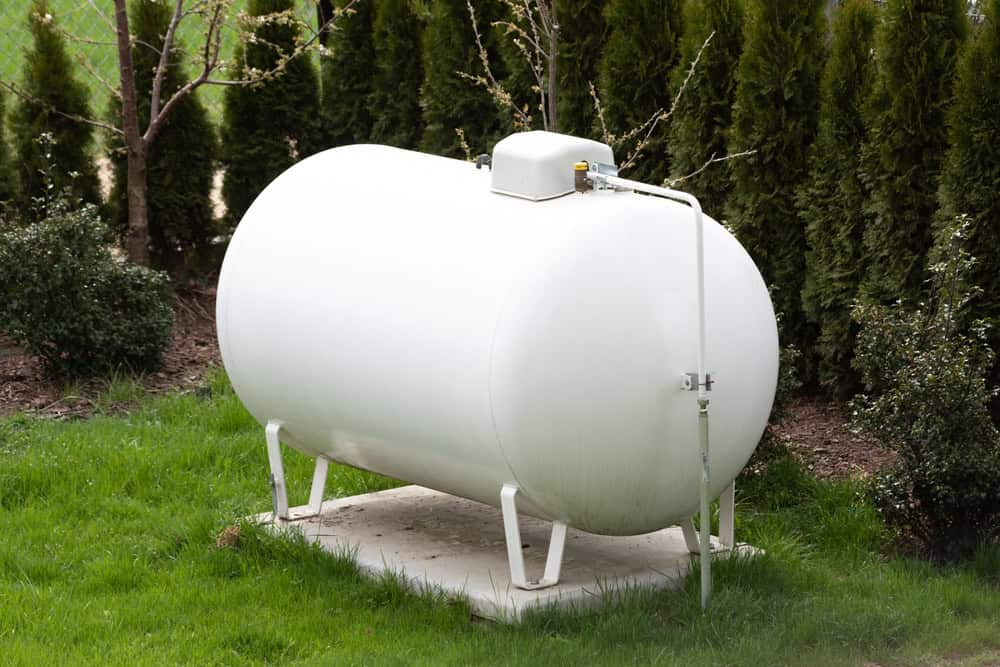
Above-ground installations cost less because they skip the excavation work. You’re looking at $400 to $3,500 total, depending on tank size. The 500-gallon tanks most homes need typically run $1,500 to $2,000 installed, including the tank, concrete pad, labor, and initial gas line connection.
Here’s what goes into that number. The tank itself costs $1,200 to $1,800. Installation labor adds another $250 to $1,000, covering delivery, placement, connections, and testing. You’ll need a concrete pad as a foundation, which runs $50 to $175 depending on size. Permits cost $25 to $150 in Suffolk County, and you’ll want to budget for gas line installation at $15 to $50 per linear foot if you’re connecting to appliances inside your home.
Above-ground tanks sit on your property where you can see them, which matters in upscale areas where aesthetics affect property values. They’re easier to inspect and maintain since everything stays accessible. Suffolk County’s coastal climate does accelerate corrosion on exposed tanks, so regular maintenance becomes more important. But the lower upfront cost and simpler installation process make above-ground the practical choice for most residential properties.
The installation itself typically takes a few hours to half a day. We deliver your tank, set it on the prepared concrete pad, level it properly, run the gas lines to your home, and test the entire system for leaks. You’ll need to be present during installation, and a licensed professional must handle all the work to meet NFPA compliance standards.
Tank placement matters for safety and compliance. Your tank needs to sit at least 10 feet from your home and other structures. It should be within 100 to 150 feet of the street for delivery truck access. If your property layout requires longer gas line runs or additional piping, expect to pay $15 to $25 per extra linear foot. These clearance requirements affect where you can place your tank, so factor that into your property planning.
Underground Propane Tank Installation Costs and Considerations
Underground tanks cost more upfront but offer benefits that matter in certain situations. You’re looking at $1,500 to $5,000 for a complete underground installation, with 500-gallon tanks typically running $1,600 to $2,400 total. The tank itself costs $2,500 to $4,500, and installation labor adds another $1,000 to $3,000 for excavation and specialized work.
The higher cost comes from what’s required to bury a tank properly. Excavation runs $50 to $200 per cubic yard, and a 500-gallon tank needs 10 to 12 cubic yards of digging. That’s $500 to $2,400 just for excavation. The tank needs protective coating to prevent corrosion from soil contact. Gas lines must be trenched to your home at $5 to $12 per linear foot. Permits might be more expensive for underground installations. And landscape restoration after installation can add hundreds more if you’re replacing sod, plants, or hardscaping.
Underground tanks make sense in specific situations. If you’re in an upscale neighborhood where visible tanks hurt property values, underground installation protects your aesthetics. The Hamptons and North Fork areas of Suffolk County often prefer underground tanks for this reason. Underground placement also handles temperature extremes better, which matters during harsh winters. The tank stays protected from weather, wind, and physical damage.
But underground tanks come with ongoing considerations. You can’t easily inspect them for corrosion or damage. Leak detection requires specialized equipment. If something goes wrong, repairs cost more because of the excavation required to access components. Suffolk County’s coastal climate accelerates corrosion on underground tanks, making the protective coating and regular inspections critical. You’ll pay $50 to $75 annually for underground tank inspections to check for leaks and ensure the valve remains in good condition.
The installation process takes longer—typically a full day including excavation. We dig the hole to proper depth and dimensions, prepare the bedding, lower the tank, connect all lines, backfill carefully to avoid damage, test the system, and restore the surface. Suffolk County administers its own petroleum bulk storage program with potentially stricter requirements than New York State regulations, so your installer needs to know local codes. Underground tanks must be at least 10 feet from buildings or property lines that can be built upon, with specific clearances for pressure relief devices and filling connections.
Propane Tank Rental vs. Buying: What It Actually Costs Long-Term
The buy-versus-lease decision affects more than just your upfront costs. It impacts your monthly propane expenses, your supplier options, and how much you’ll spend over the next 10 to 20 years. Most propane companies offer both options, but they don’t always explain the long-term financial reality.
Leasing a tank requires little money upfront—sometimes just a nominal setup fee. You’ll pay an annual lease fee ranging from $50 to $250, depending on tank size and supplier. That sounds manageable until you realize those fees accumulate. At $150 per year, you’ll pay $1,500 over 10 years and $3,000 over 20 years, just in rental charges. That’s before you factor in the higher per-gallon propane prices that often come with leased tanks.
Buying a tank requires a bigger upfront investment. You’re paying $1,500 to $2,500 for a complete above-ground installation or $2,000 to $4,500 for underground. That number feels steep compared to a small annual lease fee. But ownership eliminates ongoing rental charges and gives you complete supplier freedom. Most Suffolk County homeowners break even on their tank purchase within 10 to 17 years, depending on usage and local propane pricing.

Hidden Costs of Leasing a Propane Tank
Lease agreements come with costs that aren’t always obvious upfront. The annual fee is just the beginning. You’re locked into buying propane from the tank owner, which means you can’t shop around for competitive rates. Suffolk County residents report saving up to $2 per gallon by switching to suppliers with better pricing, but that option disappears with a leased tank.
Many lease agreements include minimum annual usage requirements. If you don’t use enough propane to meet the threshold, you’ll pay the lease fee. Use more, and some companies waive the fee—but you’re still paying higher per-gallon rates. It’s a system designed to keep you spending with one supplier regardless of whether they offer competitive pricing.
Tank removal fees catch people by surprise when they want to switch providers or move. Above-ground tank removal costs $75 to $200, which is manageable. Underground tank removal runs $1,000 to $1,500 because of the excavation required. Some companies charge these fees even if you’ve been a customer for years. Early termination fees for canceling service before your contract ends can add another $100 to $250.
The maintenance advantage of leasing—having the supplier handle repairs—sounds good until you realize that owned tanks rarely need major repairs if properly maintained. Tank recertification is required 12 years after manufacture and then every five years, but those costs are typically less than the cumulative lease fees you’d pay over the same period. And when you own your tank, you control the maintenance schedule and choose who does the work.
Leasing makes sense in specific situations. If you’re in a temporary living situation, leasing avoids the upfront investment in equipment you won’t use long-term. If you have limited cash flow and need propane service immediately, leasing provides access without a large payment. But for most Suffolk County homeowners planning to stay in their property long-term, the math favors ownership.
Long-Term Savings of Owning Your Propane Tank
Tank ownership eliminates ongoing rental fees and gives you complete control over who supplies your propane. You can shop around for the best prices, negotiate better rates, and switch suppliers if service quality declines. That freedom typically results in significant long-term savings that offset the higher upfront investment.
The break-even point depends on your usage and local pricing. With Suffolk County’s current propane prices around $3.47 per gallon and typical lease fees of $100 to $180 annually, most homeowners break even within 10 to 17 years. Heavy propane users—those heating larger homes year-round or running multiple appliances—reach break-even much sooner because the per-gallon savings compound faster.
Ownership adds value to your property. A properly maintained propane system increases your home’s appeal to buyers, especially in Suffolk County areas without natural gas access. The tank becomes a permanent asset rather than an ongoing expense. When you sell your property, the new owner inherits a paid-for propane system instead of inheriting a lease agreement with its associated fees and supplier restrictions.
The main responsibility of ownership is maintenance. You’re responsible for repairs, safety inspections, and regulatory compliance. Suffolk County’s coastal climate accelerates corrosion on tanks and fittings, making regular inspections more important. But these costs are predictable and typically less than the cumulative lease fees and higher propane prices you’d pay with a rental agreement.
You’ll also have more flexibility with tank placement and upgrades. Want to switch from above-ground to underground for aesthetic reasons? You can do that when you own the tank. Need a larger tank because your propane usage increased? You control that decision and timeline. With a leased tank, you’re working within the supplier’s equipment options and policies.
The upfront investment feels significant, but it’s a one-time expense that eliminates decades of rental fees. For most Suffolk County homeowners using propane for heating, hot water, and appliances, ownership delivers better long-term value. The key is understanding your actual propane usage, planning for the upfront costs, and choosing a tank size that matches your needs without overpaying for excess capacity.
Making the Right Decision for Your Suffolk County Property
Propane tank installation costs vary based on tank size, installation type, and whether you buy or lease. Most Suffolk County homeowners invest $1,500 to $2,500 for a complete above-ground system, while underground installations run $2,000 to $4,500. The buy-versus-lease decision affects your long-term costs more than the installation type, with ownership typically breaking even within 10 to 17 years.
The right choice depends on your situation. If you’re staying in your property long-term and want supplier flexibility, buying makes financial sense despite the higher upfront cost. If you’re in a temporary situation or need immediate propane access without a large payment, leasing provides a workable solution. Either way, understanding the total costs—including the fees that aren’t always mentioned upfront—helps you make an informed decision.
Suffolk County’s coastal climate, local regulations, and property values all factor into your installation planning. Working with an experienced local provider who understands NFPA compliance, Suffolk County requirements, and the specific challenges of coastal installations makes the process smoother. We’ve served Suffolk County since 2010, handling both above-ground and underground installations with transparent pricing and no surprise fees.