

Summary:
Plenty of people stay with a propane company they are unhappy with because they assume leaving is complicated. They picture a dug-up yard, a week without heat, or a fight over the tank. In practice, switching is a routine job that propane companies handle all the time, and most of it is done for you.
What it does take is a little homework before you call anyone. If you heat with propane in Manorville, this guide explains what actually happens when you switch: who owns the tank, what the paperwork looks like, how changeover day works, and how to time it. It also covers what to ask a propane company serving Manorville before you commit.
Who Owns Your Propane Tank?
Everything about a switch turns on one fact: whether you own the tank or lease it. Many homeowners are not sure, especially if the tank was already there when they bought the house.
The rule behind this is simple. A propane tank may be filled only by the company that owns it, or with that owner’s permission. So if you own the tank, you are free to buy propane from anyone. If your current supplier owns it, no other company can put fuel in it, and switching means swapping the tank as well as the supplier.
To find out, start with your paperwork. A lease usually shows up as a tank rental line on your bill or as a lease agreement you signed when the account was opened. If you bought the tank, you should have a bill of sale or a closing document that lists it. The tank itself often carries the owner’s name or decal, though a sticker on an old tank is not proof either way.
If the papers are lost, call your current company and ask. They will know, and the answer tells you which of the next two sections applies.

Switching When You Own the Tank
Owning the tank makes switching about as easy as it gets. The tank stays where it is, the fuel in it stays yours, and the only thing that changes is whose truck pulls into the driveway.
A new company will still want to look at the system before the first fill, and you should want that too. Expect a technician to check the tank’s data plate, its general condition, the regulator and the visible piping, and to run a leak check on the system. A supplier is responsible for what it puts fuel into, so a careful one will not fill a tank it has never seen. If the regulator is past its service life or something is not up to code, you will hear about it then, and it is better to hear it in September than in January.
Have proof of ownership ready. A bill of sale, a receipt, or the closing papers from the house purchase will do. If you have nothing on paper, tell the new company up front, because some will ask for a signed statement and others will want to confirm with the previous supplier.
You will also open an account, which usually means a short application, your delivery address and tank location, and a decision about how you want deliveries handled. Our guide to how propane tank refill services work explains the difference between scheduled and on-request fills if you have only ever had one kind.
The one step people forget is closing the old account. Call your previous supplier, tell them you have moved your business, and ask them to stop any automatic deliveries. Otherwise their truck may turn up and fill the tank on the old schedule. Settle any balance and ask for a final statement for your records.
Switching When the Tank Is Leased
A leased tank belongs to your current supplier, so it leaves with them. The new company sets its own tank and connects it to your house, and the old company collects theirs. It sounds disruptive, but for an above-ground tank the swap is usually a few hours of work in one visit.
Read your lease before you do anything else. Look for a minimum term, an early termination fee, a tank pickup or removal charge, and whatever it says about the fuel left in the tank. Policies on leftover propane differ from company to company. Some refund it at a set rate, some charge a pump-out fee that eats into the refund, and some do neither. Whatever yours says, the practical move is the same: let the tank run down toward 30 percent before the changeover, so you are not paying to leave fuel behind. Do not run it lower than that to save a few dollars, because a run-out costs more than the gas.
You give notice to the old company, and they schedule a pickup. It helps to have the new tank in place first, so the house is never without fuel, and the two companies do not need to be there on the same day. The old tank simply gets disconnected and capped until its owner collects it.
Underground leased tanks are the harder case. Nobody wants to dig one up, and sometimes the owner will sell the tank to you rather than excavate it, which turns a lease switch into the simpler owned-tank switch. Ask for a purchase price in writing before assuming you need a new hole in the lawn. If a new tank does have to go in, our guide to propane tank installation for homeowners covers placement, clearances and what the work involves.
Why Timing Matters for Manorville Homes
Manorville is propane country. Much of the hamlet sits in and around the Pine Barrens, with homes on larger wooded lots and long driveways north and south of the Expressway, and many of those streets have no natural gas main. For a lot of households here, the propane tank runs the furnace, the water heater, the range and a standby generator, which means a gap in service is not a minor inconvenience.
That is why early fall is the right window. The weather is mild, so a few hours with the gas off during a tank swap bothers nobody. Tanks are often lower after the summer, which means less leftover fuel to worry about. And installation calendars are easier in September than in the weeks after the first cold snap, when everyone who put the decision off calls at once.
Switching in midwinter is possible, but everything about it is tighter. If you are already thinking about it, start the conversation now. Once the account is open, regular propane delivery through the heating season is the easy part.
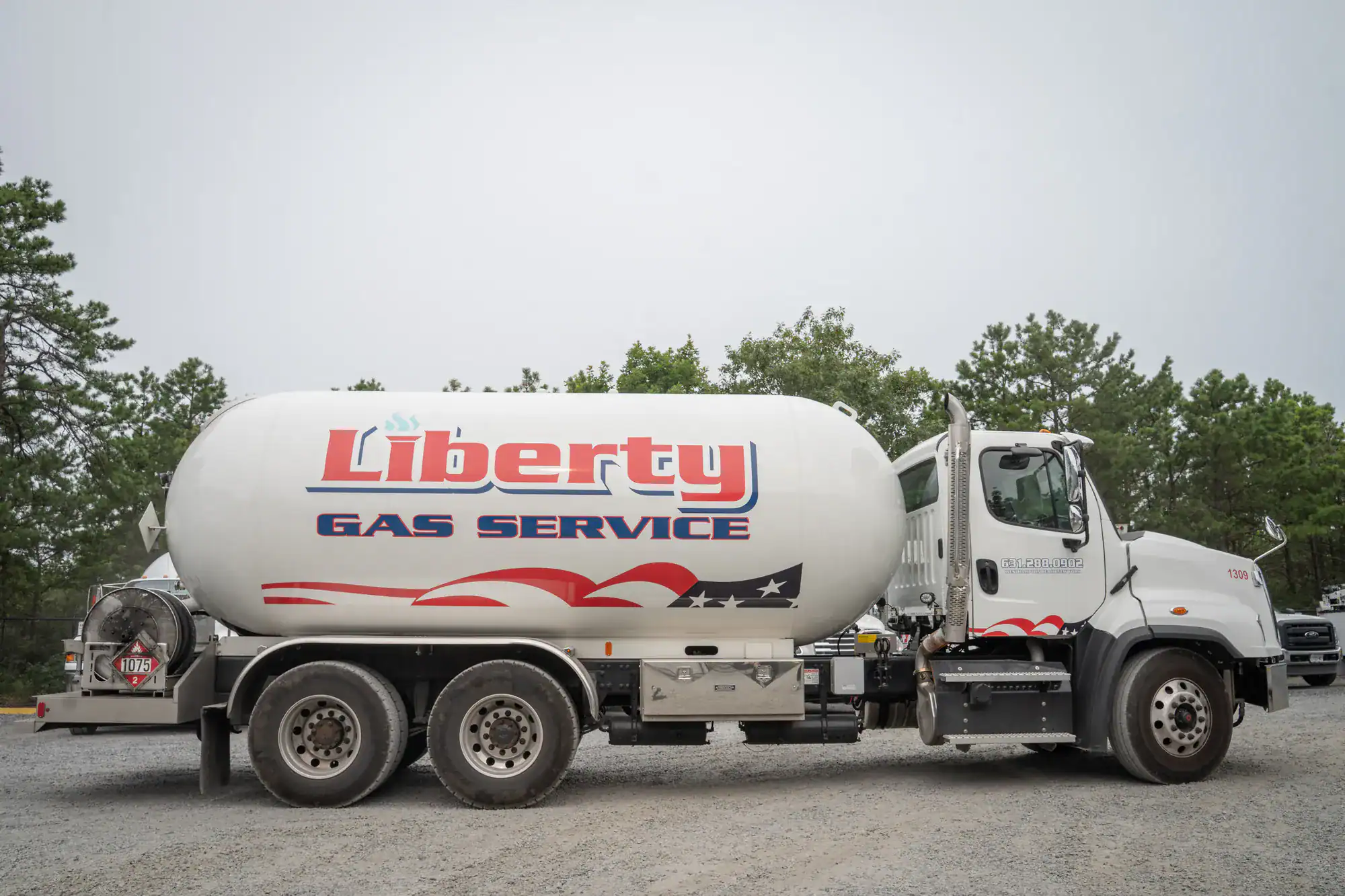
What Happens on Changeover Day
The visit follows the same pattern whether the crew is setting a new tank or taking over one you own. Knowing the steps makes it easier to plan your day around it.
If a tank is being set, the crew confirms the location first. Tanks have required clearances from the house, from windows and doors, from ignition sources such as air conditioner condensers, and from the property line, so the new tank may not sit in exactly the old spot. An above-ground tank goes on a level pad or blocks. Then it is connected to the existing gas line, with a new regulator where needed.
Next comes the part that matters most. Any time a propane system is opened or service is interrupted, it gets a leak check before gas is turned back on. The technician pressurizes the system, watches a gauge to confirm it holds, and only then opens the tank valve. After that, each appliance is put back in service, which means relighting pilots on older equipment and confirming that the furnace, water heater and range all fire properly.
Your part is small. Someone should be home, because the technician needs to get to every gas appliance, including the ones in the basement and the attic. Clear a path to the tank and move cars out of the driveway so the truck can get close. Keep pets inside. Expect the gas to be off for a stretch of the visit, so do not plan on cooking or running the dryer.
Before the crew leaves, ask them to show you the gauge reading and the shutoff valve on the new setup, and keep the paperwork that shows the leak check was done and how many gallons went in. If a question comes up later, a propane installation and service crew can handle follow-up work and repairs as well as new setups.
Questions to Ask Before You Sign
The best time to find out how a propane company works is before you are its customer. A good one will answer all of these plainly, and the answers are worth writing down.
Start with the price. Ask how the per-gallon price is set and how often it changes, and whether the price you are quoted today is an introductory rate. A low first fill followed by a steady climb is a common complaint people have about the company they are leaving. Ask what the price was last January as well as what it is today.
Then ask about fees, because the per-gallon number is only part of the bill. Find out whether there is a tank rental charge, a delivery fee, a fuel surcharge, a minimum annual usage, or an extra charge for small or off-schedule deliveries. Ask what it would cost to leave, since you now know how much that matters.
Ask how deliveries work. Find out whether they offer scheduled delivery, on-request delivery or both, how much notice an on-request order needs in winter, and what happens if you run low on a weekend. If the house is empty for part of the year, ask about tank monitoring.
Ask who does the service work. Some suppliers only deliver fuel and send you elsewhere for repairs, while others have their own technicians for leaks, regulators and appliance problems. One phone number for both is worth a lot on a cold night.
Finally, ask where they are based and who answers the phone. A company with a yard nearby and staff who know the area will find a Manorville address in a storm more easily than one dispatching from far away. Our page on what sets Liberty Gas apart as a local propane company covers how we approach these questions.
Ready to Switch Propane Companies?
Switching comes down to a short list. Find out who owns the tank. Read the lease if there is one, and note any fees and what happens to leftover fuel. Let the tank run down toward 30 percent, but no lower. Pick a mild month, have proof of ownership or your lease handy, and ask a new company the hard questions before you sign. On changeover day, expect a leak check and relit appliances before anyone leaves. Then call the old supplier and close the account.
Liberty Gas serves Manorville and the rest of Suffolk County from 225 Old Riverhead Rd in Westhampton Beach. If you are thinking about a change before the heating season, call 631-288-0902 and tell us whether your tank is owned or leased and roughly what the gauge reads. We will walk you through what your switch would involve. If you own your tank and simply need a fill, you can also send a propane delivery request online.