Summary:
Most propane problems that show up in January started as something small in September. A regulator vent packed with a wasp nest, a tank leg sinking into soft ground, a gauge nobody has looked at since spring. None of those are emergencies in early fall. All of them are harder to deal with once the furnace is running every night.
If you heat with propane in Riverhead, Calverton, Jamesport or Wading River, a half-hour walk around your system now is time well spent, and September is the month to do it. This propane tank inspection checklist covers what to look at, what normal looks like, and where the line sits between a homeowner check and a job for a propane service team in Riverhead.
What a Fall Tank Inspection Covers
A fall propane inspection is a slow lap around everything between the tank and your appliances, done while the weather is still mild. You are looking for three things: damage, obstruction, and anything that has changed since last season. Keep a notepad or your phone handy, because the goal is a list, not a repair job.
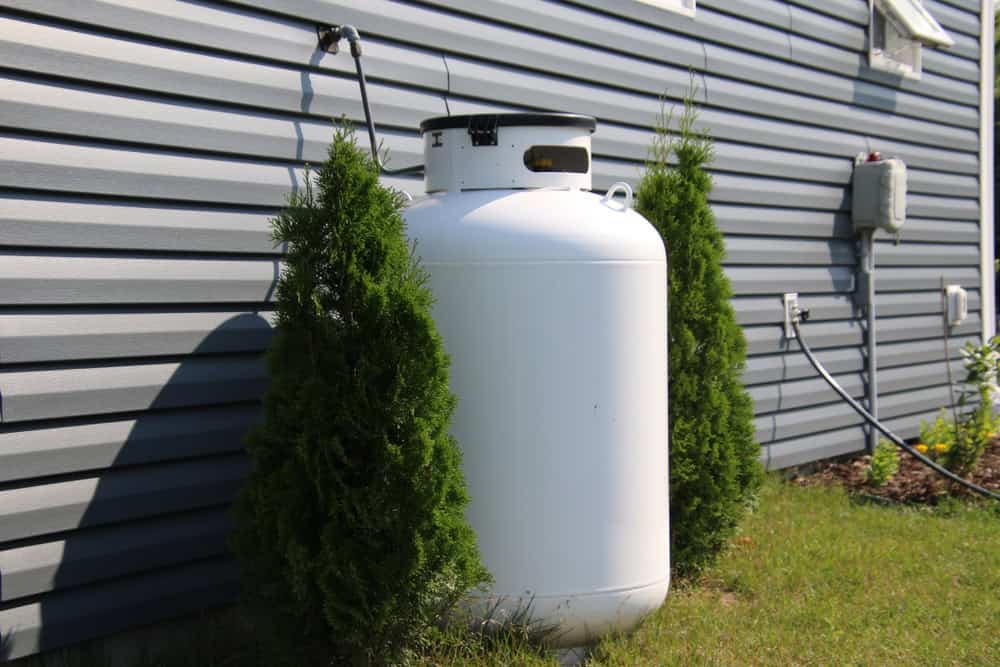
Start outside at the tank itself. Check the shell for rust, blistering paint and dents, then look underneath at the pad or supports. Lift the dome and read the gauge. Find the regulator and make sure its vent points down and is clear. Walk the path from the tank to the house and note anything that has grown, piled up or been built near the line.
Then move inside. Look at the flames on your furnace or boiler, water heater, range and fireplace, and test every carbon monoxide alarm in the house.
Most of this takes less than half an hour and needs nothing more than a flashlight. What it does not include is anything that means opening a fitting, adjusting a regulator or relighting equipment. Those stay with a technician, and the sections below explain why.
Walk the Tank: Shell, Pad and Dome
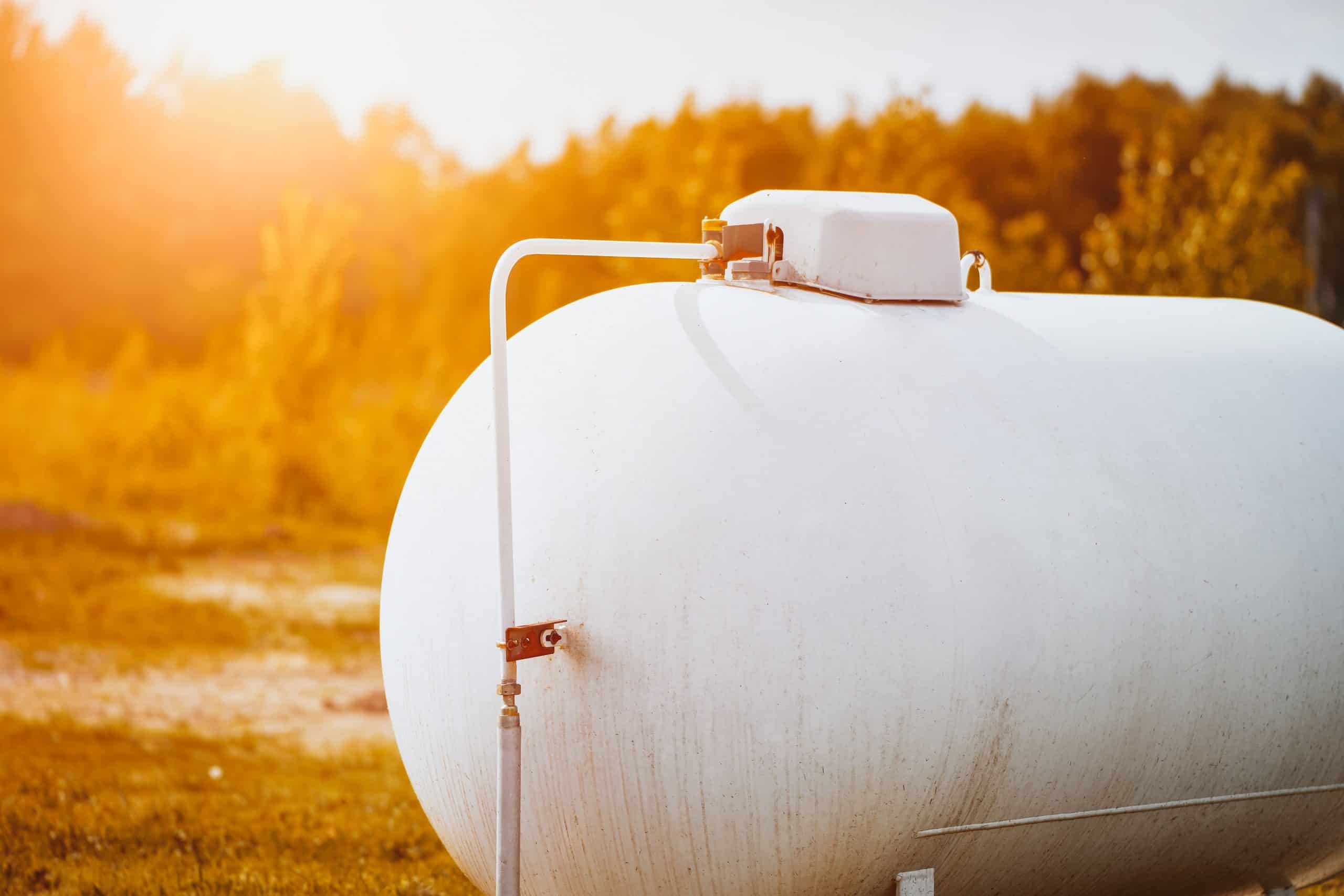
Begin with the tank body. Propane tanks are painted white or another light, reflective color for a reason: a light finish keeps the tank cooler in summer sun, which keeps the pressure inside lower. Look for rust spots, bubbled or flaking paint, and dents or gouges from mowers, plows or falling limbs. A little surface rust on the paint is common and usually cosmetic. Rust that has pitted into the steel, heavy scaling near the welds, or a dent with a sharp crease is not something to wait on.
Next, look at what the tank sits on. An above-ground tank should rest level on a concrete pad or solid blocks, with its legs or saddles firmly in contact. After a wet summer, the ground under one end can settle and leave the tank tipping slightly. That puts stress on the piping connected at the top, so a new lean is worth a call even if nothing smells wrong.
Then open the dome, the hinged cover on top of the tank. It protects the fill valve, relief valve, gauge and regulator, so it should open cleanly, close fully and latch. A cracked or missing dome leaves those parts exposed to rain, ice and insects all winter.
If your tank is buried, the dome is the only part you can see, and it deserves more attention, not less. Make sure it has not been covered by mulch or soil, that the lid still closes, and that water is not standing inside it. The ground around it should slope away from it, never toward it. Our guide to how below-ground propane tanks are installed explains what sits under that lid and why the grade matters.
While you are there, check whether the tank is leased or yours. If you lease it, repairs and repainting go through the supplier.
Read the Gauge, Then the Regulator
The gauge under the dome is a float gauge, and it reads a percentage of the tank’s capacity, not gallons. That catches a lot of people out. A reading of 60 on a 500-gallon tank means roughly 300 gallons, while the same 60 on a 120-gallon vertical tank means about 72. If you are not sure what size you have, the data plate on the tank lists it, and our propane tank sizes and capacity chart shows what each common size holds.
Two numbers matter. A full tank reads about 80 percent, never 100, because liquid propane expands as it warms and needs room to do it. And 30 percent is the reorder line. Below that, a whole-house heating system is one cold week away from a run-out, and in the middle of winter everyone else is ordering at the same time. If the needle is already near 30 in September, get on the schedule now. If you are on automatic delivery, the reading still tells you whether usage has changed since last year.
Next, find the regulator. On most homes the first-stage regulator sits at the tank, often under the dome, and a second-stage regulator is mounted where the line meets the house. Each has a small vent. That vent should point down, or sit under a protective cover, so rain and melting snow run off rather than in.
Shine a flashlight into the vent opening. Spiders, mud daubers and wasps love these openings, and a blocked vent can stop the regulator from controlling pressure properly. Ice does the same thing in winter when a vent faces up or sideways. If you see a nest, debris, heavy corrosion on the regulator body, or a vent pointing the wrong way, do not poke it clear with a wire or adjust anything. Make a note and have a technician look at it.
Why Do Riverhead Tanks Need a Fall Check?
Riverhead properties give propane systems their own set of problems. Much of the town is wooded, from the pine and oak around Calverton to the tree lines between the farm fields along Sound Avenue. By late October, leaves and needles pile up against tanks, drift into open domes and bury the stakes people rely on to find a tank after a snowfall.
Older farmhouses often have tanks that were placed decades ago, sometimes before anyone planted the hedge that now wraps around them. Bay-front homes in Jamesport, South Jamesport and Aquebogue add damp, salty air, which is hard on regulator bodies and fittings. And a house that sits empty midweek or all winter gives no warning at all when the gauge drops, which is where remote propane tank monitoring earns its place.
On farms and larger lots, check that tractors, trailers and mowers have not nudged the tank or its exposed piping over the summer, and that equipment is not parked where the delivery hose needs to reach.
A fall walk-around catches all of this while the ground is dry, the driveway is clear and there is time to fix what you find.

Check the Appliances Inside the House
The tank is only half the system. Every propane appliance in the house deserves a look before it starts working hard, and the best place to start is the flame. A healthy propane flame burns mostly blue with a small, steady tip. A lazy yellow or orange flame, one that flickers and lifts off the burner, or black soot on the burner or the wall above the appliance points to incomplete combustion. That wastes fuel, and it can mean carbon monoxide.
Check the furnace or boiler first, since it will do most of the work between now and April. Replace the filter if it has one, clear anything stored against the cabinet, and look at the vent pipe where it leaves the unit for rust, separated joints or water staining. Outside, find the exhaust and intake openings on the wall or roof and make sure leaves, nests and overgrown shrubs are not blocking them. A professional furnace cleaning and tune-up goes further, cleaning the burners and checking the heat exchanger, and early fall is usually the easiest time to get one on the calendar.
Then walk to the water heater, range, dryer and any fireplace or space heater. Look for the same warning signs: yellow flames, soot, scorching, or a pilot that keeps going out. For a propane fireplace, also look for cracked logs, cloudy glass or soot, and make sure the outside vent cap is not blocked.
Finish with your carbon monoxide alarms. Press the test button on every one, replace the batteries, and check the manufacture date printed on the back, because CO alarms have a limited service life set by the maker. You want one on every level of the home and outside each sleeping area. If any alarm is past its date, replace it before you turn the heat on for the season.
When Should a Technician Take Over?
A homeowner inspection is about noticing. Anything that involves opening the system, even briefly, belongs to someone trained to do it. That includes tightening or replacing fittings, touching the regulator, relighting a pilot on a system that has been shut off, and anything to do with a buried line.
There are good reasons for that line. When a propane system has been interrupted, whether by a run-out, a closed valve or a repair, industry safety rules call for a leak check before gas flows to the appliances again. That test pressurizes the piping and watches for a drop, and it takes proper gauges. Regulators also wear out, and a technician can read the date stamped on yours and judge whether it is due. Underground tanks carry corrosion protection that has to be tested with a meter, not by eye.
Some findings mean you should stop and call right away. If you smell rotten eggs, the odor added to propane so leaks can be noticed, do not flip light switches, use a phone indoors or start a car nearby. Leave the building, close the tank’s service valve only if you can reach it safely, and call 911 and your propane supplier from a safe distance. The same goes for a hissing sound at the tank, or frost forming on the regulator or valves on a mild day when nothing is running.
Do not rely on your nose alone. Odor can fade in rare cases and some people cannot smell it well, so a UL-listed propane gas detector near appliances adds a second warning.
Before digging this fall, whether for fence posts, a new planting bed or a drainage fix, call 811 so buried lines are marked first.
For everything else on your list, our propane service and installation team can inspect the system and take care of repairs.
Get Your Propane System Ready This Fall
A fall inspection works best as a routine, not a one-off. Pick a mild weekend in September or early October, walk the tank, read the gauge, check the regulator vent and test your alarms inside. Take a photo of anything you are unsure about. It makes the conversation with a technician faster and gives you a record to compare against next year.
Then deal with the fuel. If the gauge reads 30 percent or lower, order now rather than waiting for the first cold snap, when demand across the East End jumps. If you found rust, a leaning tank, a blocked vent or an appliance burning yellow, get it looked at while the weather still gives you room to fix it properly.
Liberty Gas serves homes across Riverhead and the rest of Suffolk County from 225 Old Riverhead Rd in Westhampton Beach. To book a service visit or ask about anything on this checklist, call 631-288-0902. If your tank just needs filling before the season starts, you can request a propane delivery online and we will get you on the schedule.