Summary:
Every propane customer ends up on one of two delivery arrangements, whether or not anyone explained the choice when the account was opened. On automatic delivery, the supplier tracks your usage and sends a truck before the tank runs low. On will-call, you watch the gauge and phone in an order when you need one.
Neither is better for everyone. The right one depends on how you use the house, how much propane it burns and who is around to check the tank. This guide explains how each plan works, where each falls short and how to decide, with a close look at the year-round and seasonal homes that rely on propane delivery in Center Moriches.
Two Ways to Get Propane Delivered
The difference between the two plans comes down to one question: who decides when the truck comes.
With automatic delivery, sometimes called scheduled or keep-full delivery, the supplier makes that decision. It estimates how fast your home burns propane and plans a fill before the tank drops too low. You do not have to watch the gauge or remember to call.
With will-call, also called on-demand or on-request delivery, you make the decision. You check the tank, and when it gets down to around 30 percent you call and ask for a fill. The supplier delivers only when you order.
Many suppliers let you move from one plan to the other later, so the choice you make now is not permanent.
Both arrangements put the same propane in the same tank, and the driver does the same job on the day. What changes is who carries the risk of running low, how often the truck visits and how much control you keep over timing. The sections below walk through each plan, and our overview of residential propane delivery covers the service itself.

How Automatic Propane Delivery Works
Automatic delivery runs on forecasting. Once a supplier has a few deliveries on record, it knows roughly how many gallons your house burns in a given stretch of weather. Most companies track this against heating degree days, a standard measure of how cold it has been, so a cold week moves your next delivery earlier and a mild one pushes it back.
From that history, the supplier schedules a fill for when your tank is expected to be somewhere around a quarter to a third full. The driver tops the tank up to its safe maximum of about 80 percent, and you usually find a delivery ticket at the door or in your inbox. You do not need to be home as long as the driver can reach the tank and its fill valve.
The weak point is that a forecast is only as good as the information behind it. It works best for a steady household that uses propane mainly for heat. It can fall behind when usage changes without warning, such as a new generator or pool heater, a houseful of guests over the holidays, or a hard cold snap early in the season. If something about your usage changes, tell the supplier so it can adjust.
Many companies now pair automatic delivery with a sensor on the tank that reports the actual level instead of an estimate. Remote propane tank monitoring takes most of the guesswork out of the schedule, which matters most for homes where usage is uneven.
Terms vary from company to company. Some require a minimum annual usage for automatic service, some price each delivery at the rate on the day it is made, and some let you pause the schedule. Ask before you sign up.
How Will-Call Propane Delivery Works
Will-call puts you in charge. You check the gauge under the tank dome, decide when it is time and call in an order. Nothing arrives unless you ask for it.
That control has real advantages. You choose when to buy, so if prices move during the season you can time a fill instead of taking whatever the rate is on a scheduled day. You can order a full tank at once rather than several smaller top-ups. And for a house that burns very little propane, will-call avoids a truck visiting on a schedule the house does not need.
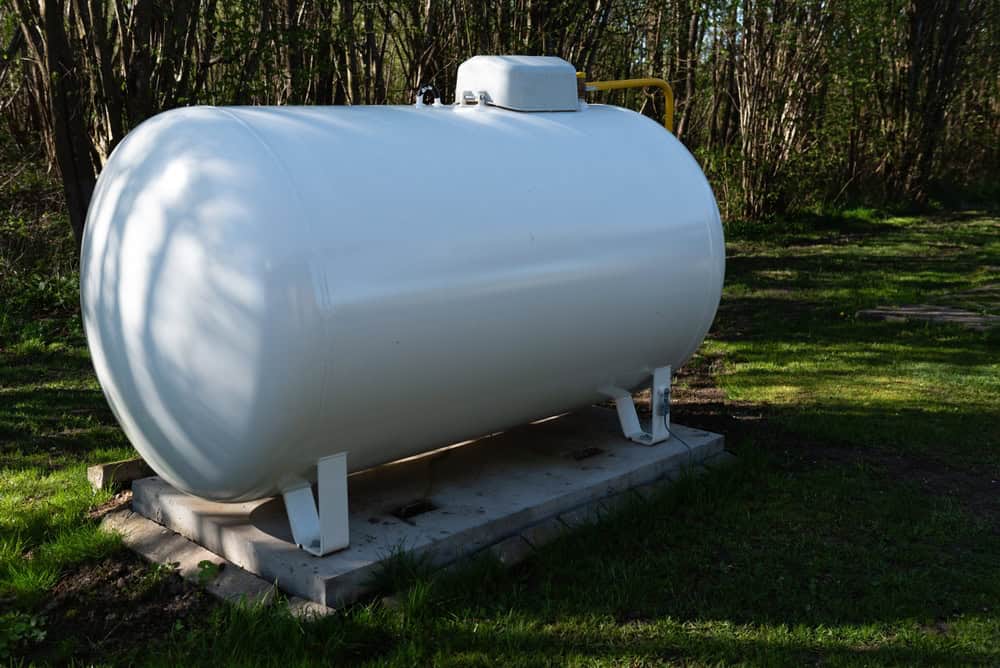
The cost of that control is responsibility. The gauge reads a percentage of the tank’s capacity, not gallons, so it helps to know how big your tank is. A 500-gallon tank at 30 percent holds roughly 150 gallons, while a 120-gallon tank at the same reading holds about 36. Our LP tank sizes chart and capacity reference lists the common sizes if you are not sure which one you have.
Call at around 30 percent, not 10. Delivery lead times stretch in cold weather, when many will-call customers tend to call in the same week, and a winter storm or a snowed-in driveway can hold a truck up for days. Some suppliers also set a minimum order or charge extra for small or rush deliveries on will-call accounts, so find out before you need one. It also helps to note the date and reading each time you check, so you learn how fast your house works through a tank in cold weather.
The real risk is running out. When a tank goes empty, the system has to be leak-checked before the gas is turned back on, and every pilot light has to be relit. That is a service call on top of the fuel, and it tends to happen on the coldest night of the year.
Why Center Moriches Homes Differ
Center Moriches is a good place to see why one delivery plan does not fit every house. The hamlet sits along Moriches Bay on the South Shore, and it mixes year-round households with second homes and waterfront places that stand empty for part of the year. Two houses on the same street can burn very different amounts of propane between November and April.
A year-round family heating with propane may need several deliveries over a winter. A summer house with the heat turned down to keep the pipes from freezing may use a fraction of that, and nobody is there to look at the gauge. Coastal weather adds its own wrinkle. Winter storms off the ocean can close roads and bury driveways, so a tank that is already low when a storm arrives becomes a real problem. Access matters too. A driver has to reach the fill point with a hose, and a long driveway, a locked gate or a tank behind a fence all take longer to deal with in January than in September.
The next two sections take those two kinds of home in turn.

When Automatic Delivery Makes Sense
Automatic delivery suits most homes where propane is the main heating fuel and someone lives there all year. In those houses the furnace or boiler burns steadily through the winter, which is exactly the pattern a supplier’s forecast handles well. The more of the house that runs on propane, the stronger the case. A home with propane heat, hot water, cooking and a dryer has far more to lose from a run-out than one that only uses it for a range.
It also suits people who simply do not want the job. Checking a gauge every week or two through the winter is easy to forget, especially for busy families, older homeowners or anyone whose tank sits at the far end of a long yard. Automatic delivery hands that task to people who track tanks for a living.
The trade-offs are worth knowing. You give up control over the exact day and price of each fill, and you may see more frequent, smaller deliveries than you would order yourself. The driver also needs access all year, so keep the path to the tank clear of snow, leave gates unlocked or give the supplier a code, and mention a new fence or a dog in the yard.
Before switching to automatic, check that your tank size matches your usage. A tank that is too small for a large, fully propane house forces frequent deliveries whichever plan you choose, and our guide to propane tank sizing for homeowners explains how capacity and usage fit together.
Even on automatic delivery, glance at the gauge now and then. A forecast can drift after a remodel, a new appliance or a change in who lives in the house, and a quick look once a month in winter catches a schedule that has fallen behind before it turns into a run-out.
Will-Call, Seasonal Homes and Low Usage
Will-call is often the better fit for homes that burn little propane. If the tank only feeds a range, a fireplace, a pool heater or a clothes dryer, it can last many months between fills, and an automatic schedule adds little. A pool heater is the classic East End example: it can work hard all summer, then leave the tank nearly untouched until the pool opens again. The same goes for owners who like to watch prices and buy when it suits them, as long as they check the gauge reliably.
Seasonal homes are the case that trips people up. A second home in Center Moriches that is fully winterized, with the water drained and the heat off, uses almost nothing over the winter, and will-call works well. Fill the tank in the fall, check it when you open the house in spring and order when you need to.
A house that is empty but heated is different. Many owners leave the heat at a low setting from November to April to protect the pipes, and that furnace keeps burning propane with nobody there to see the gauge. If the tank runs dry in February, the heat goes off, the pipes can freeze and the damage can far exceed the cost of the fuel. For that house, automatic delivery, ideally paired with a tank monitor, is the safer choice. At the very least, have a neighbor or caretaker read the gauge on a set schedule.
Whichever plan you choose for a seasonal home, fill the tank before you leave for the season, make sure the supplier has a phone number that reaches you in winter, and let them know when the house will be empty. Our guide to how propane tank refill services work covers what to expect from a fill visit.
Choosing a Propane Delivery Plan
The decision is simpler than it looks. If propane heats a house that someone lives in all year, or a house that stays heated while it sits empty, automatic delivery takes the risk of a run-out off your plate. If the tank only runs a few appliances, or the house is winterized and shut for the season, will-call gives you more control at little risk, provided someone checks the gauge and calls at around 30 percent. Either way, ask any supplier how it schedules deliveries, what it charges and what access its drivers need.
Liberty Gas delivers propane to homes in Center Moriches and across Suffolk County from 225 Old Riverhead Rd in Westhampton Beach. If you are not sure which arrangement suits your house, call 631-288-0902, tell us how the home is used through the winter and roughly what the gauge reads, and we will talk through the options for your address. If you already know you need a fill, you can request a propane delivery online.